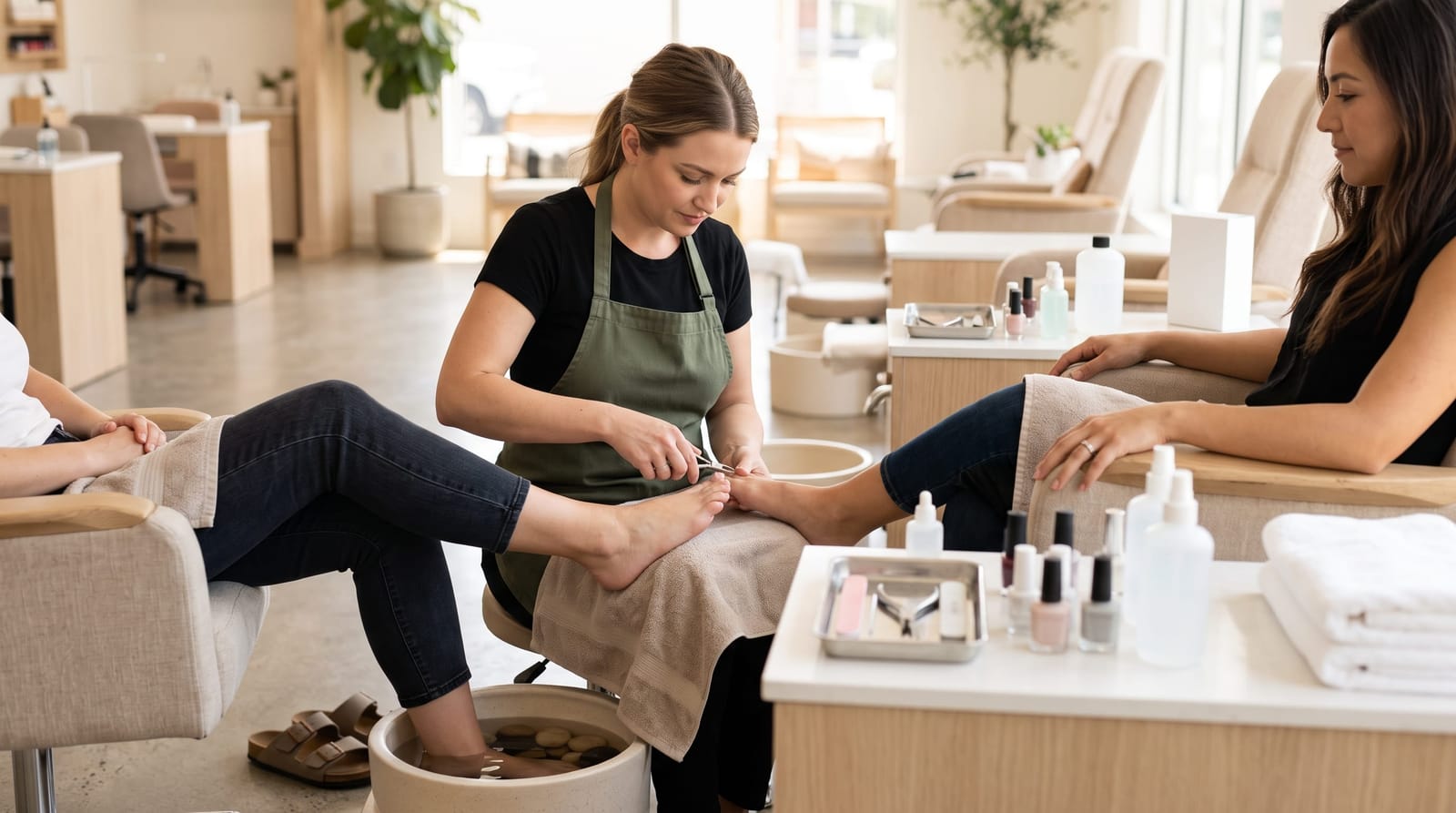
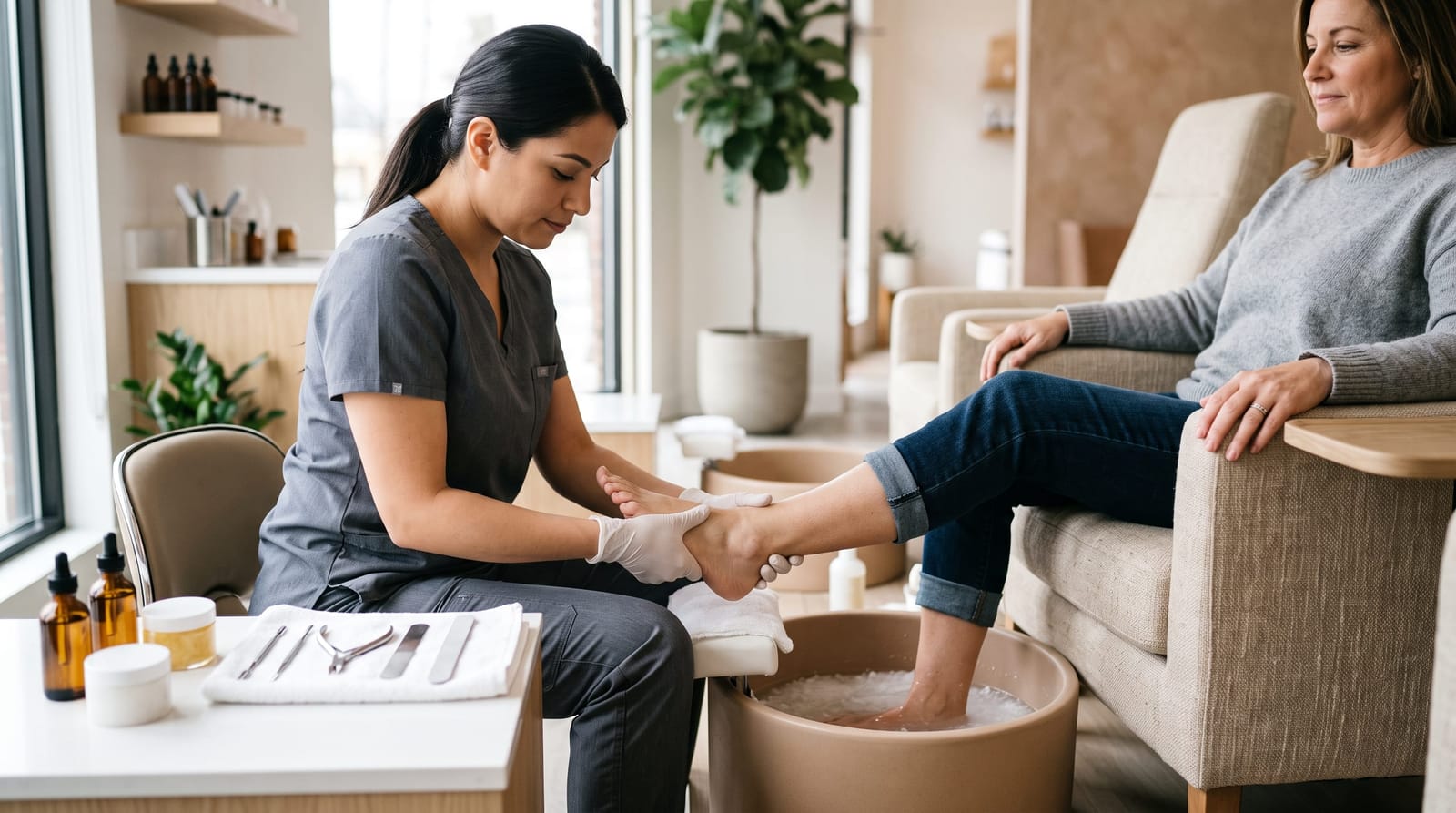
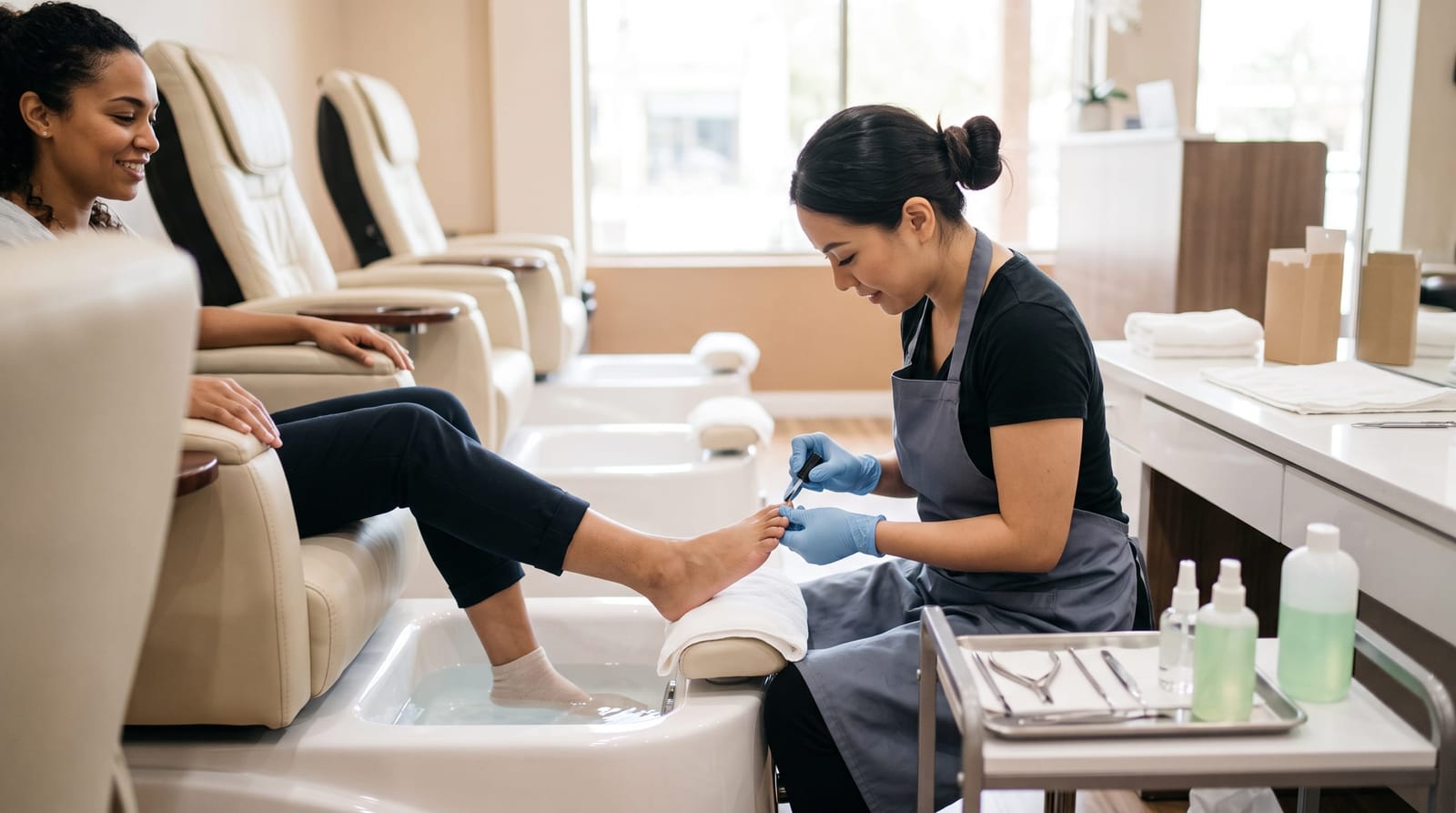
Callus Pedicure: How to Get Rid of Rough, Cracked Heels for Good
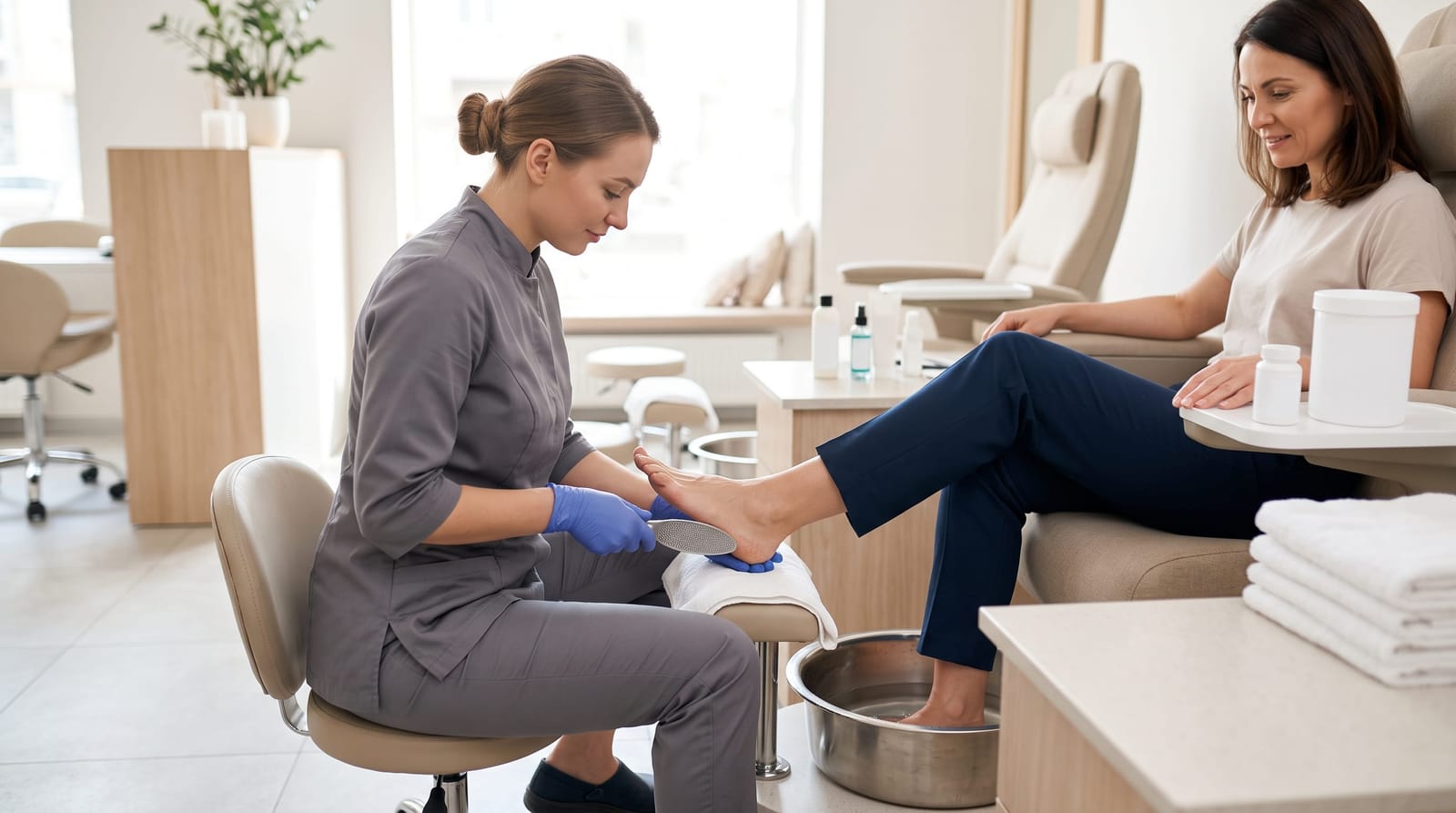
A callus pedicure can smooth thick, rough skin on your heels, but it cannot prevent calluses from returning for good. Lasting improvement depends on ongoing moisture care and reducing the friction and pressure that cause the buildup. For dry, intact skin, a callus-focused service offers targeted exfoliation. Deep or painful heel cracks need a different approach from cosmetic foot care.
If you're comparing options, explore our full range of premium foot care options or our guide to the best pedicure services in San Francisco. Below, we explain what callus care involves, its limits, and how to maintain smoother heels between visits.
How Does a Callus Pedicure Differ from a Regular Pedicure?
Calluses are areas of thickened skin that develop in response to repeated friction or pressure. They provide protection, but the buildup can become rough and uncomfortable. Dry, thickened skin around the heel may also develop cracks.
A regular pedicure focuses on overall grooming, including nail shaping, cuticle care, polish, and some skin smoothing. A callus pedicure puts more attention on areas of thickened skin. The goal is to reduce excess surface buildup, not to remove every protective layer or reach deeper, living tissue.
Common Areas of Buildup
- Heel edges: Dry, thickened skin can feel rough, catch on socks, or develop cracks.
- Ball of the foot: Pressure during standing and walking can contribute to buildup.
- Sides of the toes: Shoes that rub or crowd the toes can create localized thickening.
Professional care is not automatically better than every home routine. Gentle maintenance may be enough for mild roughness, while more noticeable buildup may benefit from focused salon care. Our comparison of cracked heel treatment in San Francisco explores those differences.
When Heel Cracks Need Medical Care Instead
A salon pedicure is cosmetic care, not treatment for wounds or foot conditions. Deep, bleeding, or painful cracks, redness, swelling, or drainage call for assessment by a licensed healthcare professional. An ingrown toenail, where the nail edge grows into surrounding skin, is also different from a callus. If you have diabetes, poor circulation, or reduced sensation in your feet, your own situation needs guidance from a licensed clinician before salon callus care or home exfoliation.
What Happens During Cosmetic Callus Care?
Products and techniques vary between services. The basic approach is to soften thickened surface skin, smooth it conservatively, and moisturize it. More aggressive removal does not mean a better result.
1. Softening the Surface
A warm-water soak can help soften dry surface skin before exfoliation. Some treatments use a targeted callus-softening product instead of, or alongside, soaking. These products differ in their ingredients and application instructions, so there is no single soaking time or product-contact time that fits every treatment.
Acid-based exfoliants and enzyme-based softeners are not the same thing. Both may be used in cosmetic exfoliation, but neither selectively affects only unwanted skin. Careful application matters more than claims about a product being especially strong.
2. Smoothing Excess Buildup
A foot file or other abrasive tool gradually reduces rough surface skin. Lighter finishing passes help even out the texture. This is different from cutting into a callus or trying to remove all of it at once.
The useful measure of a treatment is comfortable, smoother skin, not how much material comes off. Skin that feels raw or tender has not received a better treatment. Some texture may remain after a conservative session, especially where buildup is substantial.
3. Moisturizing the Skin
Exfoliation and moisturizing do different jobs. Smoothing reduces excess surface buildup; moisturizer helps dry skin retain moisture. Neither replaces the other.
Foot creams may contain moisture-binding ingredients, emollients that soften the skin, or ingredients that help reduce moisture loss. For example, urea is both a humectant, which helps skin hold moisture, and a keratolytic, which helps soften thickened skin. Its effects depend on the formulation. A stronger formula is not automatically the right choice for every heel.
4. Adding Relaxation
A foot or lower-leg massage can be a relaxing part of a pedicure, but it does not remove the shoe pressure or friction responsible for calluses. It is best understood as a comfort feature, rather than a way to prevent buildup or heal cracks.
If you're comparing specialty treatments, our article on cbd pedicure benefits explores that option. The choice of a specialty treatment is separate from how much callus smoothing your feet need.
How to Help Heels Stay Smoother Between Visits
For anyone walking San Francisco's hills or spending long stretches standing, the everyday routine matters as much as the salon visit. Filing alone does not change the conditions that created the callus.
- Keep moisture care consistent: Applying foot cream after washing and drying helps make moisturizing part of a regular routine rather than an occasional rescue treatment.
- Look for repeated rubbing: A rough patch that returns in the same place can be a reason to review shoe fit, toe room, seams, and whether the foot slides inside the shoe.
- Keep exfoliation modest: Repeated heavy filing can leave skin irritated. Home maintenance is about managing mild roughness, not recreating an intensive treatment every day.
- Avoid picking or cutting: Pulling at loose heel skin or using blades can damage surrounding skin.
- Separate appearance from comfort: A little remaining texture is different from a crack that hurts with each step. The aim is comfortable skin, not a perfectly polished heel at any cost.
For a closer comparison of home tools and salon care, see our guide to cracked heel treatment in San Francisco.
How Often Does a Callus Pedicure Make Sense?
There is no universal maintenance interval. Footwear, walking habits, dryness, and the amount of buildup all affect how quickly roughness returns. A fixed appointment schedule is less useful than noticing how your feet feel between visits.
If your heels remain comfortable and only slightly textured, routine moisturizing may be enough between pedicures. If substantial roughness returns quickly, increasing the frequency or intensity of filing alone is unlikely to solve the whole problem. The recurring pressure and friction also deserve attention.
Choosing a Pedicure at Thi Spa & Nails
At Thi Spa & Nails in San Francisco's SoMa neighborhood, we offer a Callus Pedicure and Callus Treatment. Our Classic Pedicure includes a soak, nail shaping, callus smoothing, cuticle care, and a foot and leg massage.
- For general grooming and mild roughness: Our Classic Pedicure combines nail care with skin smoothing.
- When thickened skin is the main concern: Our Callus Pedicure is the callus-focused option on our menu.
- For an additional moisturizing step: We offer warm paraffin as an addition to any manicure or pedicure.
We also offer Gel, Refresh-Mint, and CBD Pedicures. Our guide to cbd pedicure benefits provides more detail on that specialty option.
Smoother heels are a maintenance goal, not a one-time cure. Conservative exfoliation, regular moisturizing, and less rubbing from footwear work together more sensibly than trying to remove every trace of callus in a single visit.