Dip Powder Removal: Salon vs. At-Home: What's Safer for Your Nails?
If you've ever worn dip powder nails, you already know how gorgeous and long-lasting they can be. But when it's time for a change, the removal process is where things can go sideways: fast. Whether you're wondering if you can safely remove dip powder at home or whether a salon visit is worth the trip, this guide breaks down both options honestly. We'll walk through exactly how each method works, what can go wrong, and what professional removal in San Francisco actually looks like at Thi Spa & Nails.
How Dip Powder Removal Actually Works
Before comparing the two approaches, it helps to understand what you're actually removing. Dip powder systems use a cyanoacrylate-based adhesive (similar to super glue) that bonds the powder layers tightly to your natural nail. This bond is strong by design: it's why dip manicures can last two to four weeks without chipping. To learn more about what affects that wear time, see our guide on how long does dipping powder manicure last.
There are two primary removal techniques used in the industry:
- Acetone soak method: Pure acetone is applied to the nails: either by soaking fingertips in a bowl or wrapping each nail with an acetone-saturated cotton pad secured with foil. The acetone breaks down the adhesive bond over 10-20 minutes, allowing the product to be gently pushed off the nail plate.
- Filing method: An e-file or hand file is used to mechanically thin down and remove the product layer by layer. This requires significant skill to stop precisely at the natural nail without filing into it.
Most professional salons use a combination of both: filing down the bulk of the product first to speed up the process, then finishing with an acetone soak to remove the remaining thin layer cleanly. Neither step should involve forceful scraping or peeling, and that distinction matters enormously for nail health.
At-Home Removal: The Honest Pros and Cons
At-home dip powder removal is possible, and for someone with patience and the right supplies, it can be done without significant damage. The real risk isn't the acetone itself: it's the shortcuts people take when it's taking longer than expected.
What tends to go wrong at home
- Peeling or picking: When the product softens but doesn't slide off easily, the temptation to peel it away is strong. Peeling removes layers of the natural nail along with the product, leaving nails thin, weak, and prone to breakage. This is the most common source of post-dip nail damage.
- Over-filing: Without professional training, it's difficult to feel the difference between filing through product and filing into the nail plate. Aggressive filing thins the natural nail and can cause lasting sensitivity.
- Insufficient soak time: Rushing the acetone step and then forcing the product off creates the same problem as peeling: mechanical damage to the nail surface.
- Using non-acetone removers: Standard nail polish remover doesn't break down dip powder effectively. People who try it often end up frustrated and resort to force.
If you ever break a nail mid-removal or mid-wear, understanding what a salon can do to repair it is worth knowing: that's a topic covered in our post on nail repair at a salon (coming soon).
Professional Removal: What Happens at Thi Spa & Nails
At Thi Spa & Nails in San Francisco, removal is treated as a nail care service in its own right, not an afterthought before your next set. Here's what the professional process looks like:
- Assessment: A technician examines the condition of your current dip manicure: how thick the layers are, whether there's lifting, and how your natural nails are growing underneath.
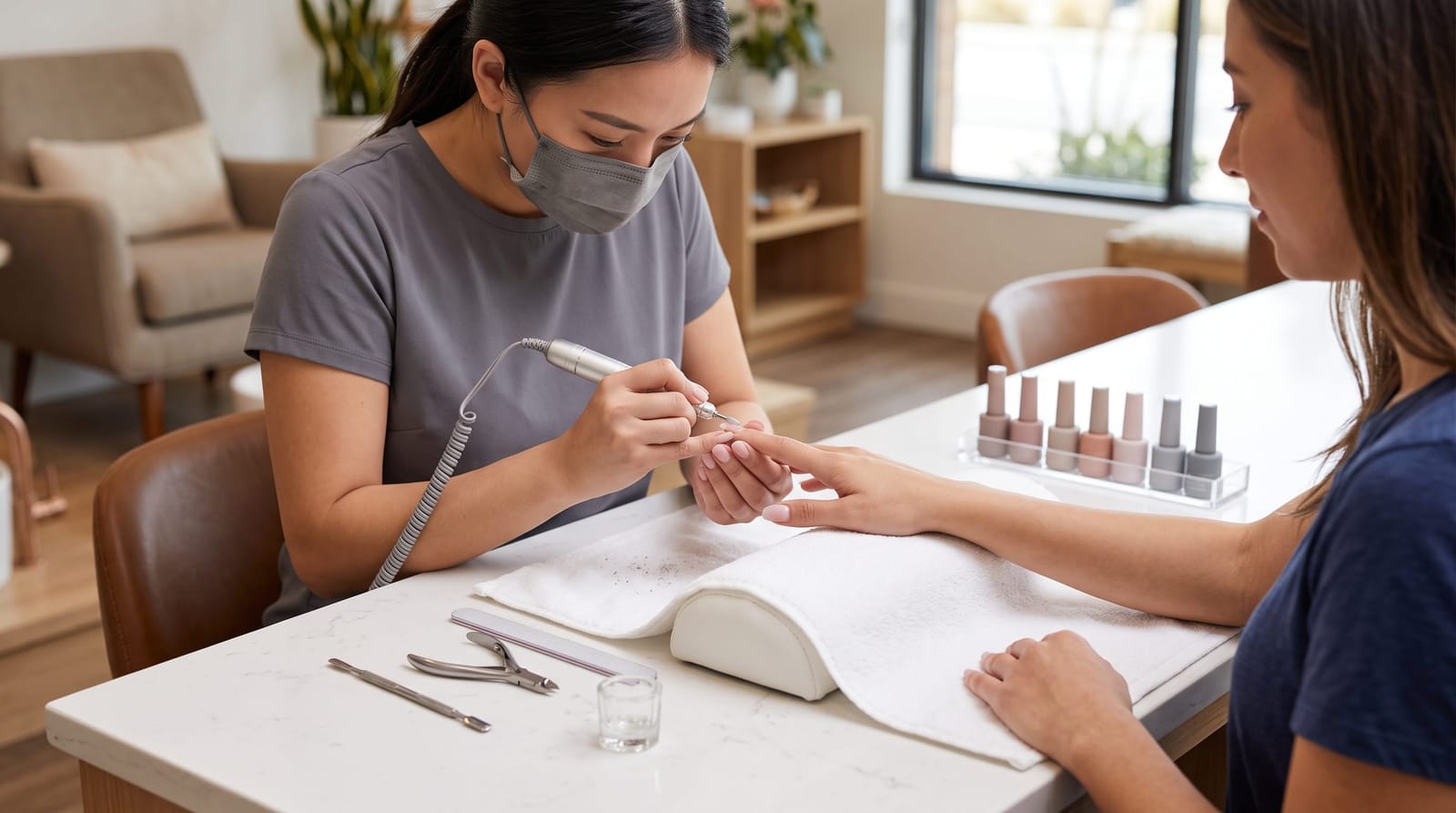
- Filing down the bulk: Using a professional e-file at the correct speed and angle, the technician removes the majority of the product without touching the natural nail. This step requires skill and practice to execute safely.
- Acetone wrap: Each nail is wrapped with a cotton pad soaked in pure acetone and foil. The technician monitors soak time carefully, typically 10 to 15 minutes, so the product breaks down fully without over-exposing the surrounding skin.
- Gentle push-off: Once the product has softened completely, it's gently pushed away with a wooden stick. No scraping, no force.
- Nail finishing: Technicians buff away any residue, check for surface irregularities, and apply cuticle oil to begin rehydrating the nail plate and surrounding skin.
You can book a removal-only appointment at Thi Spa & Nails: you don't need to commit to a new set at the same visit. This is a great option if your nails need a break or if you want to assess nail health before deciding on your next service.
Cost Comparison: San Francisco Removal Pricing
When weighing salon vs. at-home removal, cost is a fair consideration. Here's what the San Francisco market looks like for dip powder removal services:
- Removal-only appointments in San Francisco typically start around $20 for approximately 25 minutes at some salons.
- Dip powder services that include removal as part of a full set appointment range from $65 to $110 depending on the salon and whether nail prep is included.
- Add-on removal services at day spas may start at $10-$15 when combined with another service.
Compare that to at-home costs: a bottle of pure acetone, foil, cotton pads, and a cuticle oil run approximately $15-$25 total, and can be reused. So the raw cost of DIY removal is lower. But if damage occurs and your nails need repair, strengthening treatments, or additional salon visits to recover, the savings disappear quickly. For many people, the $20-$25 cost of a professional removal is simply the smarter investment.
The Verdict: Which Is Safer?
If you are detail-oriented, patient, and willing to follow the process correctly, including waiting the full soak time without picking, at-home removal can be done without significant damage. The key variables are discipline and technique.
However, professional removal is objectively lower-risk for most people. The combination of proper filing technique, monitored soak time, and a trained eye for when the product is ready to come off cleanly reduces the chance of nail damage significantly. For anyone who has had nail damage from a previous DIY removal, is dealing with thin or sensitive nails, or simply wants peace of mind, booking with Thi Spa & Nails is the straightforward answer.
If your nails feel rough, thin, or sensitive after any removal, whether done at home or at a salon, consider giving them a rest period before your next enhancement and speak with your nail technician about conditioning options.
Frequently Asked Questions
How long does professional dip powder removal take?
A professional removal-only appointment typically takes 20 to 30 minutes at most San Francisco salons. If you're booking removal plus a new set in the same visit, budget 1 hour 15 minutes to 1 hour 30 minutes total depending on the service.
Can I book a removal-only appointment without getting a new set?
Yes. Thi Spa & Nails offers removal-only appointments for clients who want to take a break from enhancements, assess nail health, or simply remove an old set without committing to new services that day. It's worth calling ahead to confirm availability, as removal-only slots book up, particularly on weekends.
Is acetone bad for your nails?
Acetone is a dehydrating solvent, so repeated or prolonged exposure can temporarily dry out the nail plate and surrounding skin. However, used correctly, in a controlled soak for an appropriate amount of time, it is a standard and widely accepted removal agent in professional nail care. Following removal with cuticle oil and a hand moisturizer helps restore hydration. For specific concerns about nail or skin sensitivity, a licensed nail technician can advise based on your individual nail condition.
What happens if I just peel off my dip powder nails?
Peeling dip powder off, even when it appears to be lifting, almost always removes the top layers of your natural nail along with the product. This leaves the nail plate thinner, rougher, and more prone to breakage and peeling on its own. The damage is typically visible as white, chalky-looking patches on the nail surface. Repeated peeling can cause lasting thinning that takes several months of growth to fully recover from.
Ready to Book Your Removal?
Dip powder removal doesn't have to mean damaged nails, when it's done right, your natural nails can come through in great shape and ready for whatever comes next. Whether you choose to remove at home with care or visit Thi Spa & Nails for a professional removal appointment in San Francisco, the most important thing is skipping the peeling and giving the process the time it needs. If you're curious about how your nails hold up between sets, our guide on how long does dipping powder manicure last covers the full picture of dip powder wear and timing. When you're ready to book, Thi Spa & Nails offers removal-only appointments: no new set required.