Dipping Powder Manicure: Everything You Need to Know Before Your Appointment
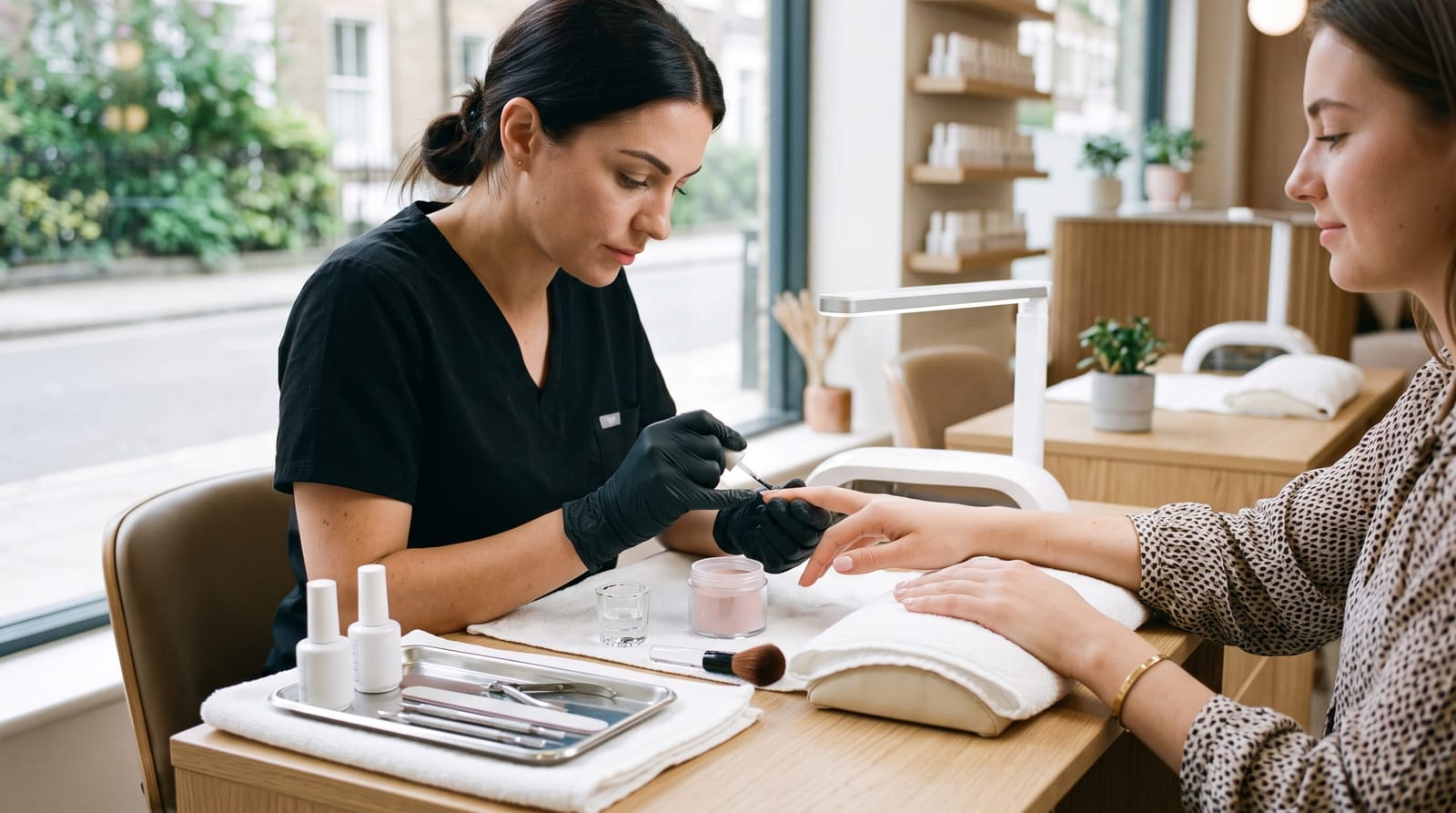
A dipping powder manicure creates a firm, colored coating by combining fine powder with liquid bonding and sealing products. It can last for several weeks and generally does not need a UV or LED lamp to harden. The tradeoff is that it takes more work to remove than regular polish, and application, hygiene, and removal practices matter for nail health.
If you’re comparing the different types of manicures, dip sits between the simplicity of traditional polish and the more structured feel of nail enhancements. It may suit someone who wants lasting color without frequent polish changes, but it isn’t automatically the best choice for every nail.
This beginner’s guide covers what happens during an appointment, how dip differs from gel and acrylic, what to expect from maintenance, and which questions are worth asking before booking in San Francisco.
What Is a Dipping Powder Manicure?
With dip powder, the color comes from pigmented powder rather than a bottle of colored polish. A technician builds layers using a liquid base and powder, then applies products that harden and seal the coating. The result is a durable overlay on the nail. Cleveland Clinic’s overview of dip powder manicures describes this combination as a long-lasting alternative to traditional polish.
Despite the name, your fingers do not necessarily need to go into a powder container. Powder can be applied using an individual portion or a pour-over method. That distinction is important when discussing salon hygiene.
Does dip powder add length?
A dip manicure can simply cover your existing nails. Added length is a separate service choice and may involve tips, depending on the system and salon. If you want extensions rather than an overlay, mention that when booking; “dip powder manicure” alone may not communicate the finished look you have in mind.
Does it really need no lamp?
The dip coating typically hardens through its liquid system rather than lamp curing. However, a salon may use a gel top coat that does require a lamp. If avoiding UV exposure is part of your decision, ask about the entire service, including the finishing coat, not just the powder.
What Happens During a Dip Powder Appointment?
The exact sequence depends on the product system and whether you arrive with an existing manicure. A typical appointment follows these stages.
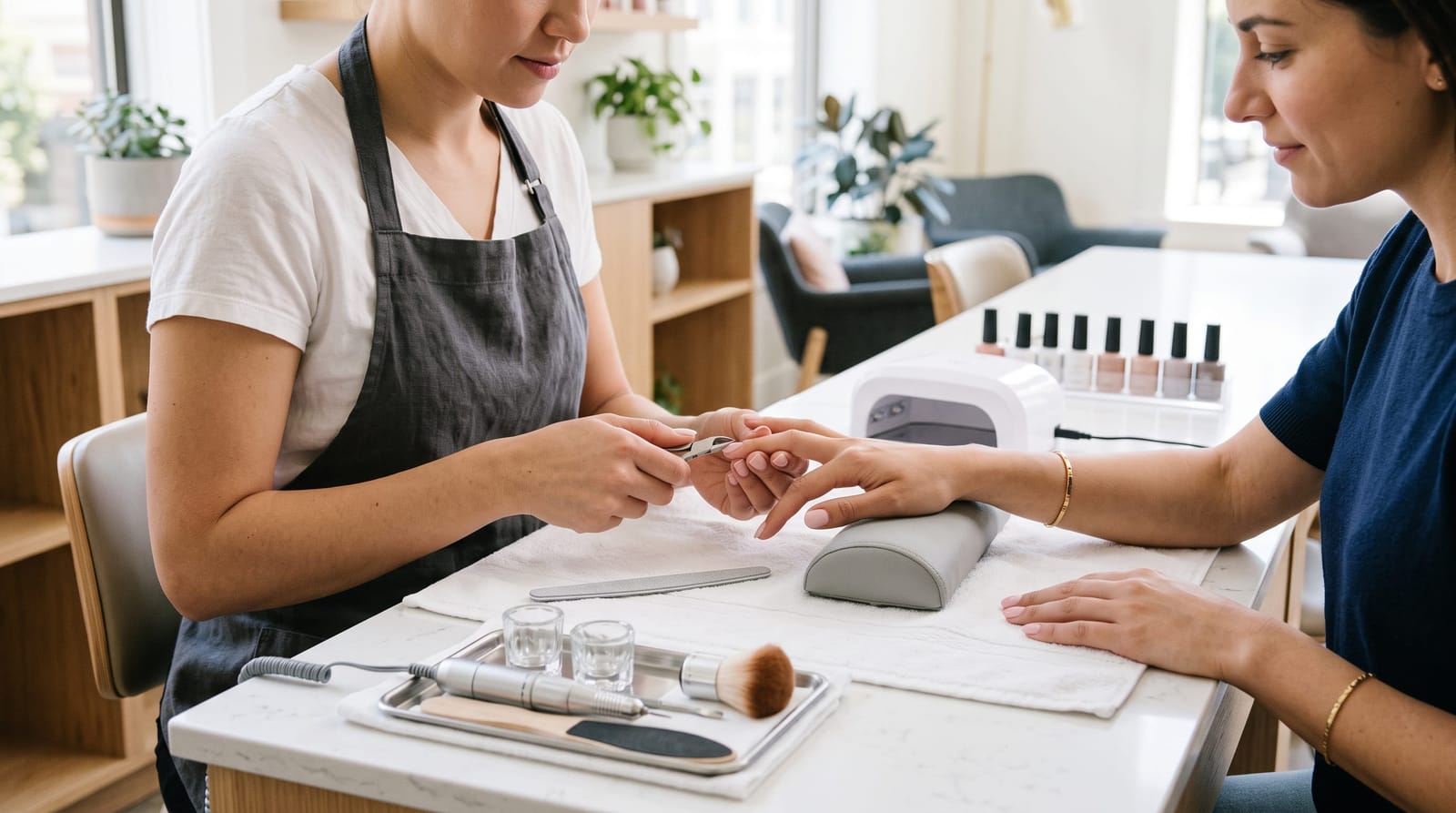
- Consultation and removal planning. You discuss length, shape, color, and the finish you want. Let the technician know what is already on your nails and whether you have noticed lifting, tenderness, or previous product reactions.
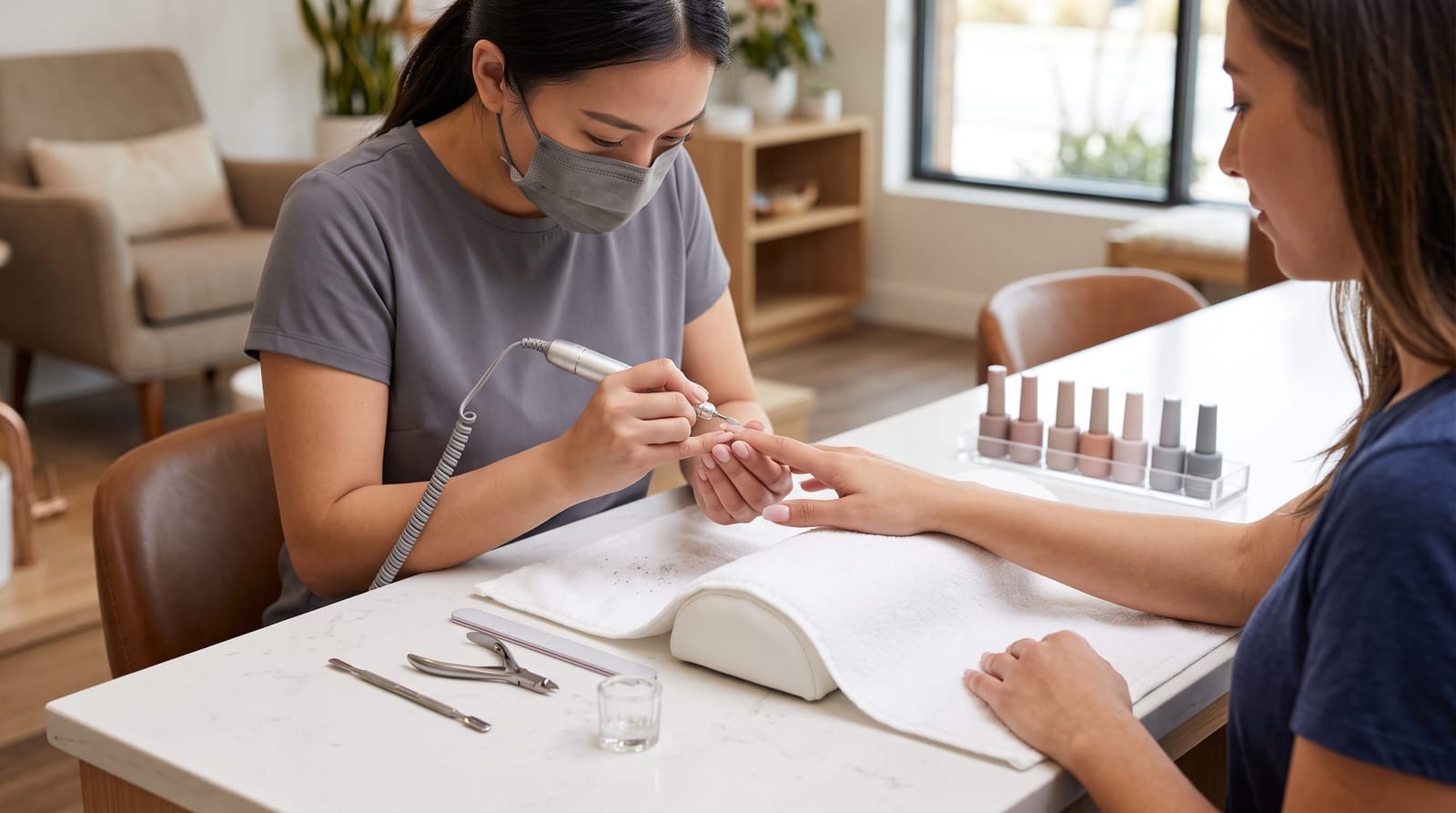
- Nail preparation. The technician shapes the nails and prepares the surface for adhesion. Preparation should have a clear purpose; extensive thinning of the natural nail is not a benefit of the service.
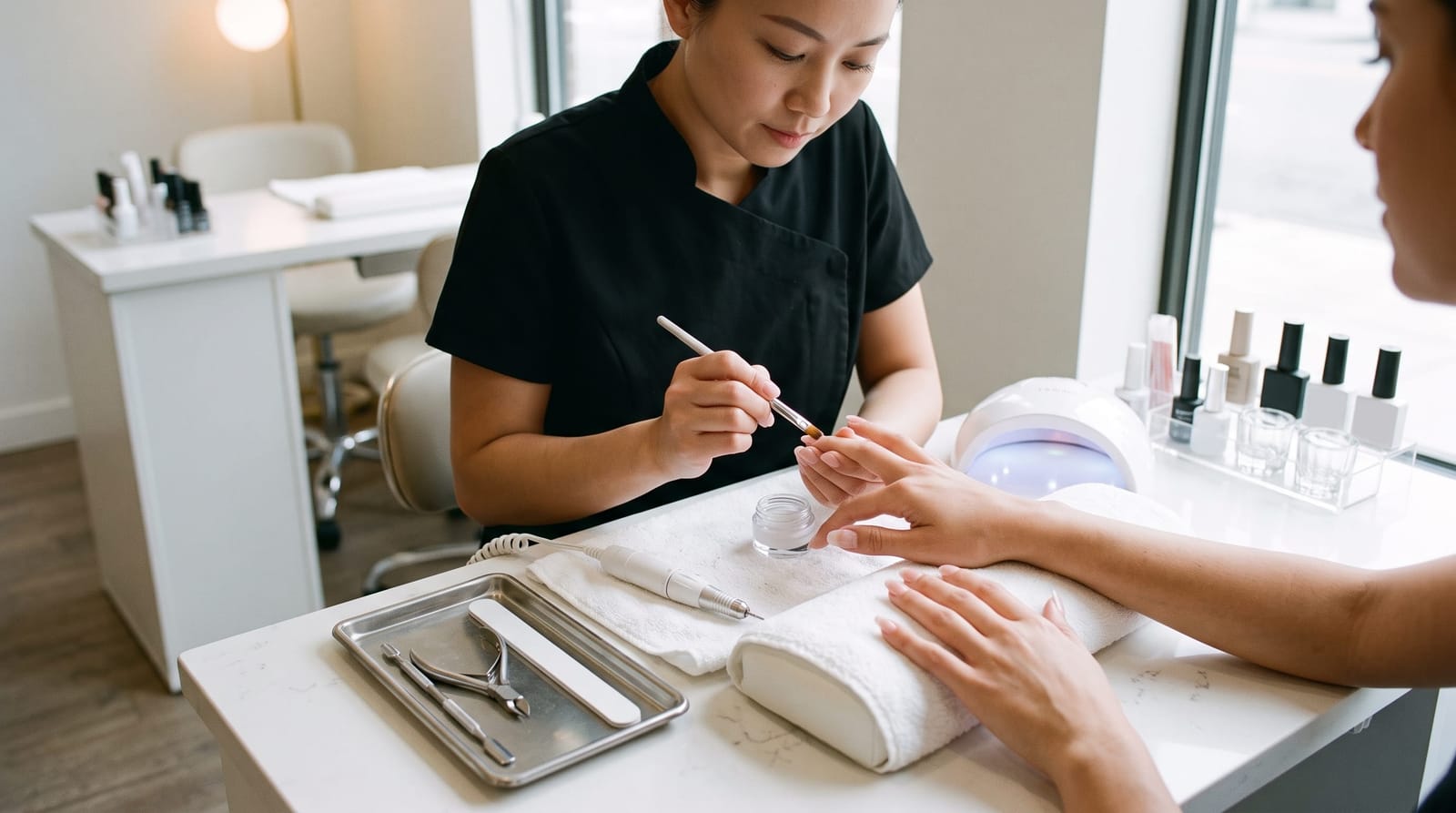
- Base and powder application. Liquid base is applied, followed by powder. This is repeated to build color coverage and structure. Virgo & Gem’s explanation of the process describes this layered base-and-powder method.
- Activation and refinement. An activator hardens the coating, and the technician refines its shape and surface according to the product system.
- Finishing. A top coat provides the final finish. Before leaving, there is an opportunity to check the shape, edges, and comfort of the manicure.
For a first appointment, bring a reference photo and describe what you like about it. “Short, rounded nails with a sheer pink finish” gives a technician more useful direction than “something natural.” Ask whether your chosen shade is sheer, opaque, or glittery, since those finishes can look quite different on the nail.
Also confirm whether removal, added length, nail art, or repairs need to be included in the booking. These details can change the appointment’s scope.
Dip Powder vs. Gel vs. Acrylic: What Changes?
These names describe different product and application systems, not a simple ranking from healthiest to least healthy. The preparation, service quality, maintenance, and removal all matter.
| Service | How it works | Main decision point |
|---|---|---|
| Traditional polish | Liquid color dries without a curing lamp. | A straightforward option for frequent color changes, with less lasting wear than dip. |
| Gel polish | Gel color cures under a compatible UV or LED lamp. | Useful to compare with dip when you want lasting color without added length. |
| Dip powder | Powder and bonding liquids form a hardened coating, usually without lamp curing. | A firmer overlay with a removal commitment beyond ordinary polish. |
| Traditional acrylic | Liquid monomer and polymer powder form a sculptable enhancement. | Often considered when shaping or extending the nail is a central goal. |
Dip is not the same as gel polish
Gel polish is brushed on and lamp-cured. Dip builds its coating through powder and liquids. Their thickness and feel depend on the products and application, so “dip is always thicker” or “gel always looks more natural” are not reliable rules.
Also, gel polish and hard gel are different services. Hard gel can be used to build structure, and its removal may differ from soak-off gel polish. When comparing menus, ask which gel service is being offered.
Dip and acrylic are related, but applied differently
Dip powder is commonly based on acrylic polymers, so “not acrylic” can be a misleading shorthand. The important distinction is the application: traditional acrylic combines liquid and powder into a workable bead, while dip uses layers of bonding liquid and powder.
If your main goal is pronounced length or a particular sculpted shape, discuss that goal first rather than selecting a service by name alone.
How Long Does a Dipping Powder Manicure Last?
Cleveland Clinic reports that dip powder manicures can last up to four weeks. That is a possible wear time, not a guarantee or a recommended interval for everyone. Nail growth, length, daily use, product adhesion, and application can all affect how the manicure looks and holds up.
There are also two different meanings of “lasting”: the coating may remain intact while the gap near the cuticle becomes more visible than you prefer.
For example, in a hypothetical comparison, someone wearing a sheer shade on short nails may find regrowth less noticeable than someone wearing a dark, opaque shade on longer nails. Neither person’s experience establishes a universal maintenance schedule.
- For appearance: consider how much visible regrowth you are comfortable with.
- For everyday use: think about whether your preferred length catches on clothing or gets in the way of routine tasks.
- For maintenance: ask what the salon recommends when an edge lifts or a nail breaks, rather than assuming it can wait until the next color change.
Our guide to how long a dipping powder manicure lasts explores wear time and maintenance in more detail.
Can Dip Powder Be Refilled?
Sometimes, but dip fills are not offered by every salon or appropriate for every manicure. Some technicians remove the existing coating and apply a fresh set; others may offer a fill when the remaining product and nail condition allow it.
A fill generally involves reducing and rebalancing the existing coating, preparing the new growth, and adding product. It is not simply painting over the gap near the cuticle.
When a fresh application may be discussed
- You want a different color. Because the pigment is within the powder layers, a substantial color change may require removal.
- There is lifting or damage. The technician needs to assess the affected area rather than conceal it beneath more product.
- The coating has become bulky. Adding layers without adjusting the existing structure can change the shape and feel.
- The previous product is unknown. A new salon may have a different approach when it cannot identify the system already on your nails.
Before booking a “refill,” ask whether that service applies to dip powder and whether the appointment might become a removal and fresh application after assessment.
How Is Dip Powder Removed?
Dip powder is commonly removed with acetone after the top surface is reduced. The coating softens gradually; the exact process depends on the system and how much product is present. Removal is a separate part of the service, not an afterthought.
Peeling or forcibly prying off an enhancement can damage the natural nail. Acetone can also leave nails and surrounding skin feeling dry. These are among the tradeoffs discussed in Cleveland Clinic’s review of dip powder benefits and risks.
A salon appointment offers an opportunity to identify the coating and manage removal without guessing which product is on the nail. That does not make every professional removal equally careful: technique still matters.
For a closer comparison of the options, see salon versus at-home dip powder removal. When there is pain, inflammation, or a suspected reaction, a licensed healthcare professional can advise on the specific situation.
Nail Health and Hygiene: What Matters Most?
Ask how powder is kept separate between clients
Shared powder containers are a hygiene concern. Cleveland Clinic highlights the risk of multiple clients dipping into the same jar. A useful question is: “Do you use an individual portion or pour-over application, and what happens to leftover powder?”
The answer matters more than the method’s name. A pour-over process still needs to keep used or excess powder from being returned to the shared supply.
Durable does not mean damage-proof
A strong coating does not necessarily make the underlying natural nail stronger. Repeated preparation, picking, or forceful removal can contribute to thinning and brittleness. Dip powder also is not automatically harmless because it is advertised as “natural,” “organic,” or lamp-free.
People can develop reactions to nail products. For personal concerns about allergies, persistent irritation, nail changes, or whether enhancements are appropriate, consult a licensed dermatologist or other healthcare professional. A nail technician can explain a cosmetic service but cannot diagnose a nail condition.
Separate cosmetic repairs from health concerns
A chipped coating and a painful break are different situations. If a nail breaks, describe whether only the product is affected or whether there is tenderness or injury. Our guide to what happens when a gel or dip nail needs salon repair explains the cosmetic repair process. Pain, swelling, or possible infection calls for medical guidance rather than simply covering the area.
What to Ask Before Booking in San Francisco
Trust in a dip powder technician is best supported by clear explanations and observable practices, not an unsupported “best salon” claim. When considering Thi Spa & Nails, the same questions are useful as at any salon:
- Is dip powder currently offered, and does the booking include removal of my existing manicure?
- How is powder kept separate between clients?
- Does the finishing system include a lamp-cured gel top coat?
- Do you offer dip fills, or remove and reapply?
- Can I see examples of the length and finish I want?
- How do you handle lifting, a broken nail, or concerns noticed during preparation?
Specific answers help you judge whether the service fits your expectations. They also give the technician the information needed to discuss realistic options before application begins.
Is Dip Powder Right for Your Next Manicure?
Dip powder is worth considering if you want a durable colored overlay and are comfortable planning for careful removal. Traditional polish may fit better if frequent color changes are your priority. Gel polish or a structured enhancement may be worth comparing when your preferred feel, length, or shape points in another direction.
To explore your options, contact Thi Spa & Nails to confirm current dip powder services and discuss your existing manicure, preferred finish, and removal needs.