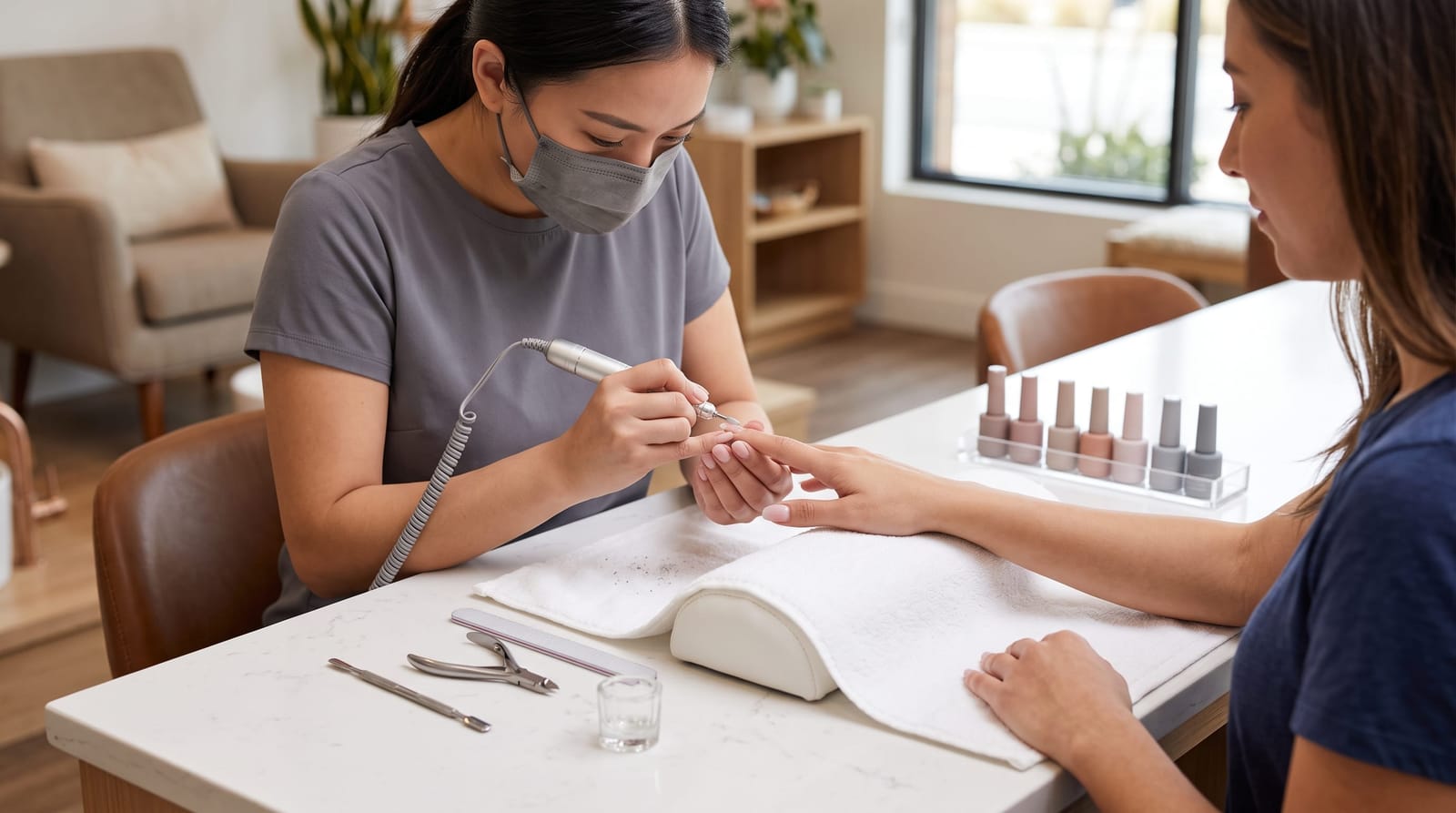
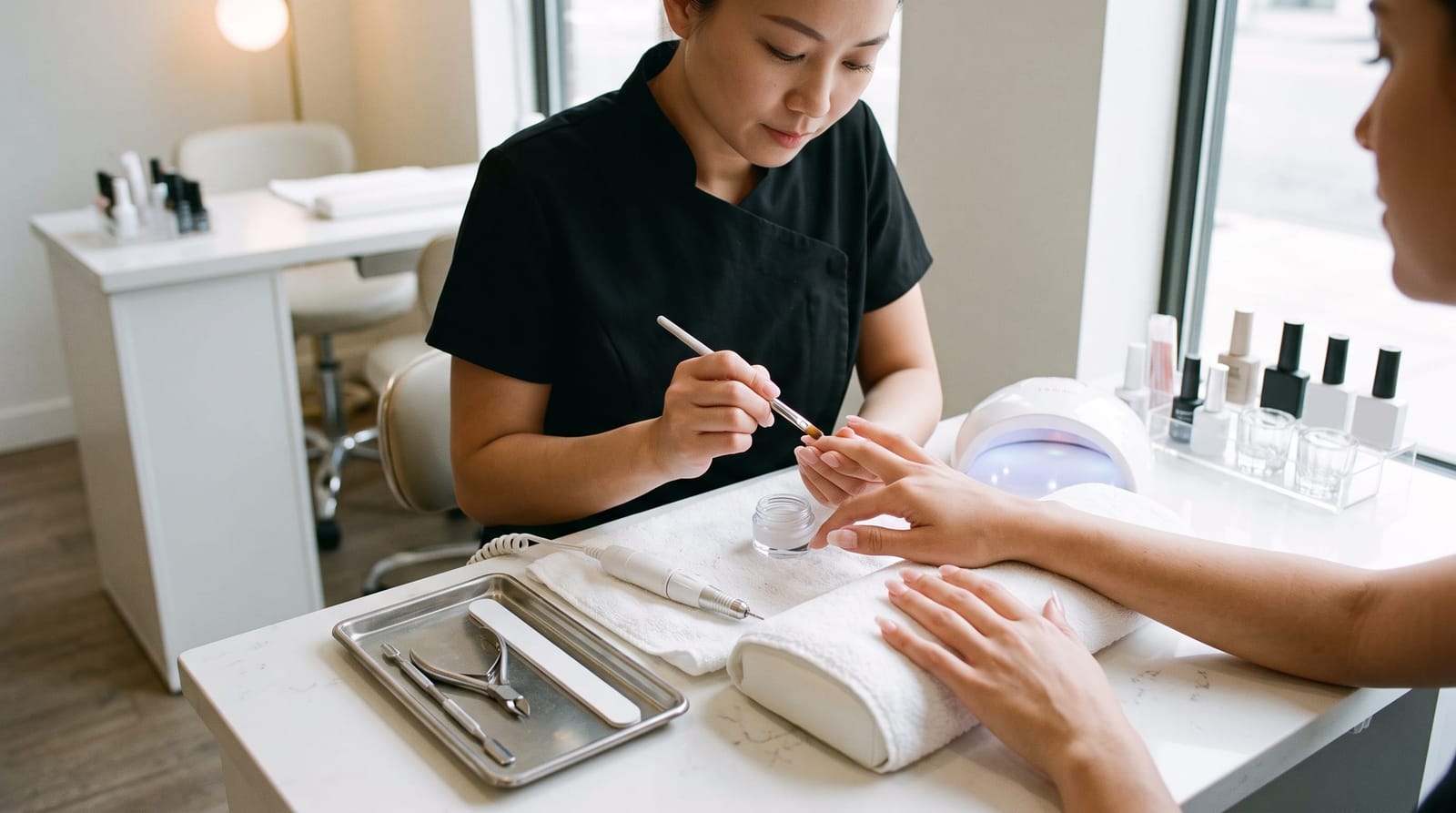
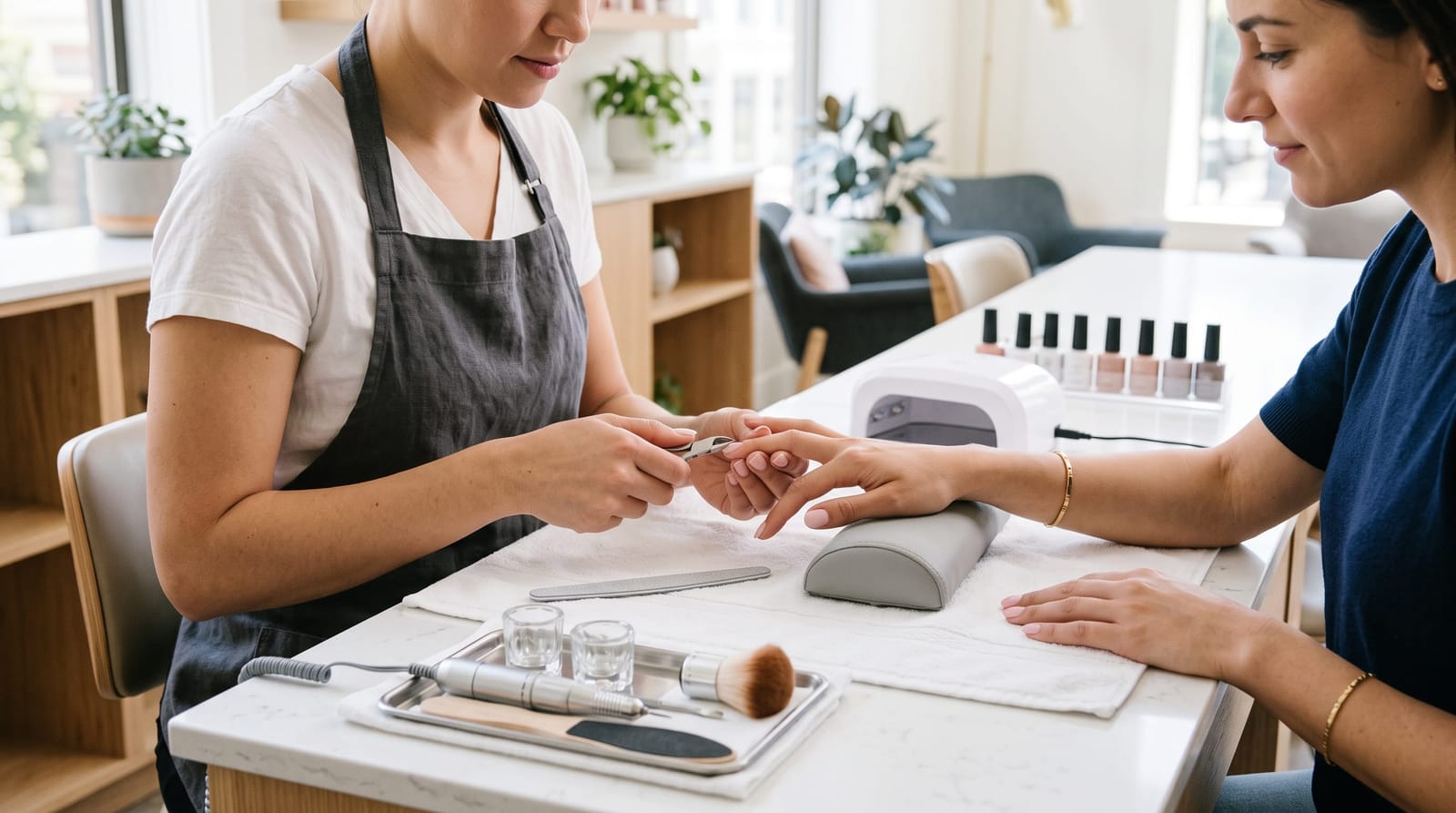
Hard Gel Manicure vs. Dipping Powder: Which Lasts Longer?
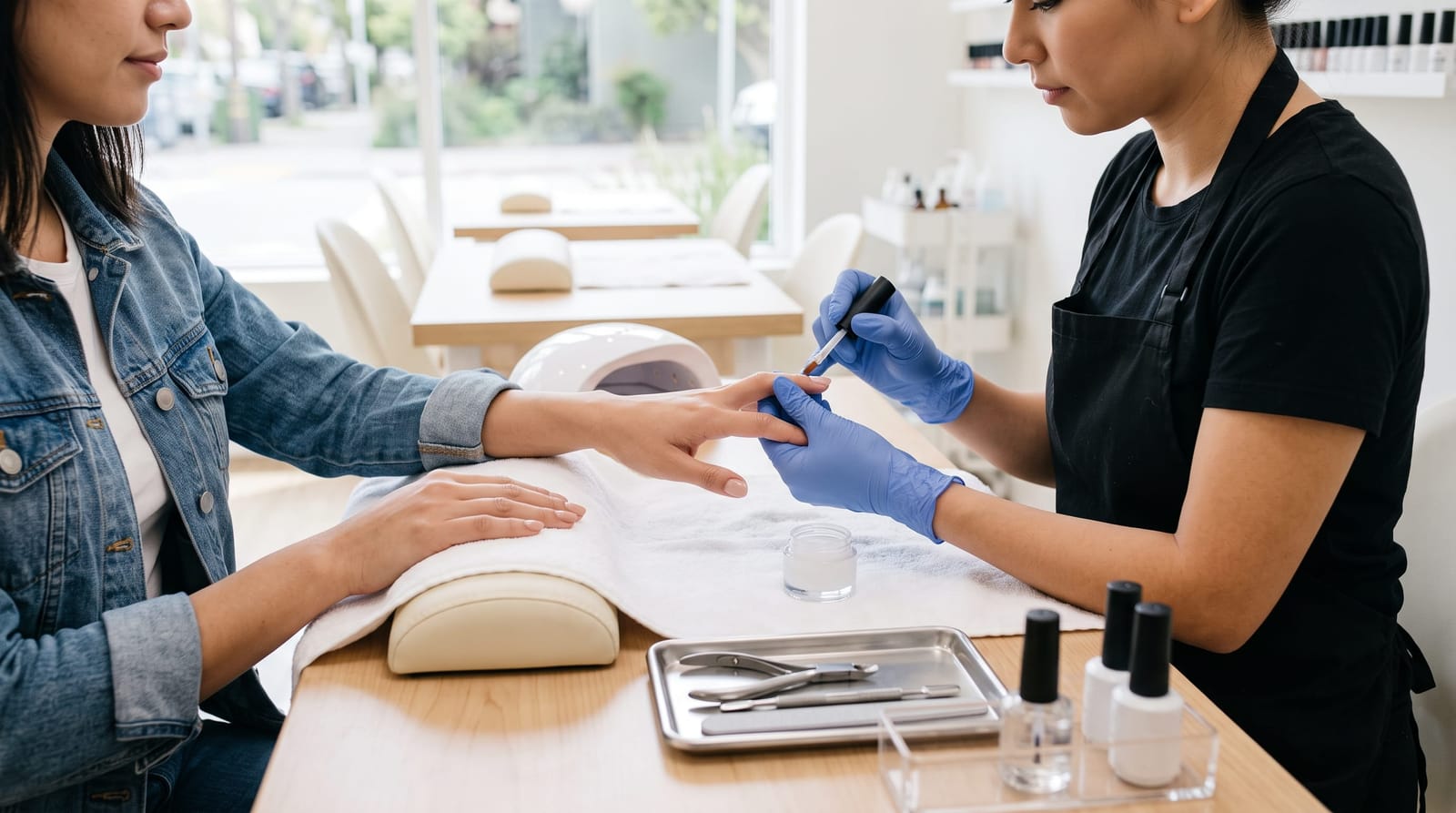
Neither hard gel nor dipping powder consistently wins for chip-free wear between appointments. Hard gel’s main advantage is ongoing maintenance: a well-adhered overlay can often be refilled rather than completely replaced. Preparation, nail length, application quality, and daily wear all affect how either manicure holds up.
Both options can create a smooth, polished surface with added strength. The more useful distinction is what happens as your nails grow: can the existing structure be maintained, or will the next appointment involve removal and a fresh application?
Hard Gel vs. Dipping Powder at a Glance
| Comparison | Hard gel | Dipping powder |
|---|---|---|
| Main appeal | Custom structure with the option of ongoing refills | A firm overlay, often with color built into the powder layers |
| Common uses | Maintaining a structured overlay or added length | Reinforcing short to moderate-length nails |
| Appearance | Can be sculpted to adjust the nail’s contour and profile | Can look smooth and natural with controlled layers and careful shaping |
| Application | Gel is shaped with a brush and cured under a compatible lamp | Resin and powder are layered, then activated and finished |
| Maintenance | Often refilled if the remaining product is sound | Refills may be possible, but removal and reapplication are also common |
| Removal | Traditional hard gel is filed down; it does not soak off like gel polish | Usually reduced by filing, then soaked off according to the product system |
One menu distinction matters here: “builder gel” is not automatically another name for hard gel. Builder gels include both soak-off and file-off formulas, so the exact product determines the removal method.
Durability: Wear Time and Refill Potential Are Different
There are two ways to interpret “lasts longer.” One is how long a manicure looks tidy before growth, lifting, or damage calls for attention. The other is whether some of the original enhancement can remain in place through several maintenance appointments.
Hard gel has an advantage in the second category. When the existing product is well adhered, a technician can maintain and rebalance the overlay without completely removing it at every visit. That does not mean the set can go indefinitely without maintenance.
Dipping powder can also wear well, and suitable sets can sometimes be filled. Removal and a fresh application may be more practical, particularly when changing powder colors. Refill potential alone does not tell you which manicure will resist chips longer.
What affects how well either manicure lasts?
- Length: Longer nails create more leverage when they catch or hit a surface. Keeping a manageable length can matter more than changing products.
- Structure: Carefully placed support is more useful than making the entire nail thick.
- Preparation: Adhesion depends partly on careful nail preparation and application suited to the product.
- Daily use: Repeated impacts, picking, and using nails to pry objects can compromise either manicure.
- Growth: Even an intact set can become unbalanced or look overdue as the natural nail grows.
If your priority is maintaining the same structured set over time, hard gel is worth considering. If your priority is avoiding chips between visits, the product name alone will not decide the outcome.
Appearance: Sculpted Contour vs. Layered Color
Hard gel allows precise control of the nail’s profile
Hard gel remains workable before it cures, allowing the technician to shape the contour, sidewalls, and apex, the area of added structure that supports the enhancement. This can help create a balanced overlay, a more consistent shape across the hand, or added length.
The finished effect depends on the gel and the design. Hard gel may be clear, tinted, or covered with a separate color product. It does not have to look thick or dramatically extended.
Dipping powder can look refined, too
Dip systems build the coating through repeated resin-and-powder layers. Controlled application and careful finishing help avoid bulk around the cuticle and free edge. A dip manicure can look understated on short nails, while pigmented or glitter powders can provide a more noticeable finish.
Neither system is automatically more natural-looking. For a useful comparison, look at examples with your preferred length and shape, including side views rather than only photographs taken from above. The dipping powder manicure appointment guide explores that service in more detail.
Appointment Time Depends on the Complete Service
Hard gel and dip involve different processes, but neither is always quicker.
A hard gel service generally includes preparation, gel placement and curing, shape refinement, and finishing. Dip generally includes preparation, repeated resin-and-powder application, activation, shaping, and a top coat. Some dip services use a gel top coat, so choosing dip does not necessarily mean no lamp will be used.
Existing product removal, extensions, repairs, detailed art, and a major shape change can all add work. A first application may also take a different amount of time than routine maintenance.
Whether you are browsing San Francisco gel service listings on Booksy or a salon menu, compare the full appointment rather than the manicure name alone. Useful questions include:
- Does the appointment include removal of my current product?
- Is the service an overlay on natural nails, extensions, or a refill?
- Is color included, and does nail art require additional time?
- How is an existing set from another salon assessed for a fill?
Removal: File-Off Hard Gel vs. Usually Soak-Off Dip
Hard gel requires filing
Traditional hard gel does not dissolve in acetone like soak-off gel polish. Removal involves filing down the coating while protecting the natural nail beneath it. Depending on the condition of the set and the service plan, a technician may leave a thin, well-adhered layer rather than remove every trace.
This matters if you like switching frequently between enhancements and bare nails. A file-off product designed for ongoing maintenance can be less convenient for that routine than a soak-off system.
Dip usually involves filing and soaking
Dip removal commonly starts with reducing the top layers, followed by an acetone soak according to the product system. The coating’s thickness and finish affect the process. “Soak-off” does not mean instant removal, and a fresh dip appointment may need extra time for removing the previous set.
Neither removal method is automatically harmless or damaging. Peeling, prying, or excessive filing can damage the natural nail regardless of the product. For persistent pain, unexplained discoloration, nail separation, or surrounding skin irritation, a licensed healthcare professional can assess your individual situation.
Hard Gel Refills vs. Dip Refills: What Can Stay?
A refill is more than covering the visible gap near the cuticle. As a nail grows, its supporting structure moves forward. Maintenance can involve shortening the nail, reducing old product, correcting its balance, and adding material where needed.
For hard gel, the deciding question is whether the existing product remains well adhered and suitable to retain. Lifting, cracks, an unfamiliar product, or a substantial design change may alter the maintenance plan. Compromised areas need attention rather than simply being covered with fresh gel.
Dip refills depend on the product system and the salon’s process. Matching the existing color and assessing the underlying layers can influence whether a fill makes sense. Offering dip manicures does not automatically mean a salon offers dip refills.
The guide to booking a hard gel or dipping powder refill in San Francisco explains that distinction further.
Which Fits Your Nails and Routine?
Hard gel suits a focus on structure and continuity
Hard gel is a useful option when you want a shaped overlay, plan to maintain added length, or prefer an ongoing refill routine. Its appeal is the ability to adjust and maintain the structure rather than repeatedly starting from bare nails.
For example, if you like keeping the same almond shape and neutral finish, maintaining a hard gel overlay may fit your routine better than regular complete removal.
Dip suits a firm colored overlay
Dip is worth considering for short to moderate-length nails when you like powder finishes and are comfortable with removal and reapplication. It may fit a routine centered on fresh color sets rather than maintaining sculpted extensions.
If you prefer short, rounded nails and a different powder color at each visit, a fresh application may matter more to you than refill potential.
Nail condition matters more than the label “weak nails”
Thin or flexible nails do not automatically make one system the better choice. Added rigidity changes how a nail feels, but an enhancement does not treat the cause of brittleness or damage. Current nail condition, desired length, and previous reactions to nail products all belong in the decision.
Choosing a Hard Gel or Dip Manicure in San Francisco
At Thi Spa & Nails in San Francisco, we offer both hard gel manicures and dipping powder manicures. The useful starting point is your preferred length and finish, followed by how you want to maintain them. Details about your current product, when it was applied, any lifting or breaks, and planned color or shape changes help make the appointment discussion specific to your nails.