How to Treat Cracked Heels: Professional Callus Treatment vs. DIY

Cracked heels are one of the most common foot concerns we hear about at Thi Spa & Nails, and one of the most misunderstood. Many people reach for a drugstore lotion and hope for the best, only to find the same rough, painful skin returning within days. Others wait too long and end up with deep fissures that need professional attention. Whether you're dealing with mild dryness or stubborn callus buildup, knowing when to DIY and when to book a professional callus pedicure can make all the difference. Here's what you need to know.
Understanding Why Heels Crack in the First Place
Before reaching for any treatment, it helps to understand what's actually happening beneath the surface. Cracked heels occur when the skin around the heel rim loses moisture and elasticity, becomes thick, and eventually splits under the pressure of walking and standing. The skin on the heel has no oil glands, which makes it naturally prone to dryness: a challenge that San Francisco's cool, windy climate can quietly intensify year-round.
Several factors contribute to cracking:
- Prolonged standing on hard surfaces, which increases pressure on the heel pad
- Open-backed shoes and sandals, which allow the heel to splay outward without support
- Hot showers that strip the skin's natural moisture barrier
- Dehydration and nutritional deficiencies that affect skin turnover
- Neglected callus buildup, which paradoxically worsens cracking because thick, rigid skin cannot flex
The last point is important: a callus isn't just a cosmetic problem. When dead skin accumulates without being gently removed, it creates a hard shell that cracks under everyday stress. Softening alone won't resolve it: exfoliation and targeted care are also necessary. This is precisely where professional callus pedicure services offer something at-home routines simply cannot replicate.
Expert Tips for At-Home Cracked Heel Care
A consistent home routine is genuinely effective for mild dryness and early-stage cracking. The key word is consistent. Occasional moisturizing rarely penetrates deeply enough to make a lasting difference. Here are the practices that professional estheticians most commonly recommend to clients between salon visits:
Tip 1: Soak Before You Exfoliate
A warm foot soak for 10-15 minutes softens hardened skin and makes exfoliation far more effective. Add a small amount of Epsom salt or a gentle foot soak product to the water. Avoid soaking for more than 20 minutes: over-soaking can actually strip moisture from the skin barrier.
Tip 2: Use a Pumice Stone or Foot File: Gently
After soaking, use a pumice stone or foot file in slow, circular motions on rough areas. Avoid aggressive scrubbing or metal graters, which can remove too much skin at once and create irritation. Less is more: aim to thin the callus gradually over multiple sessions rather than trying to eliminate it in one sitting.
Tip 3: Apply an Occlusive Moisturizer
Standard lotions evaporate quickly. For cracked heels, look for a heavier product containing urea, shea butter, or glycerin: ingredients that draw moisture into the skin and create a protective layer. Apply generously to clean, dry heels immediately after exfoliation.
Tip 4: Sleep in Cotton Socks
Wearing moisture-wicking cotton socks after applying your heel cream is often called an "occlusive wrap" method. It locks in the moisturizer overnight and significantly accelerates softening. This simple habit, done a few nights per week, is one of the most effective at-home strategies available.
Tip 5: Stay Consistent
Results from home care typically appear after two to four weeks of regular effort. If you're not seeing improvement, or if heels are painful, bleeding, or developing deep fissures, that's a signal that professional treatment is warranted.
What Professional Callus Treatment Offers That DIY Cannot
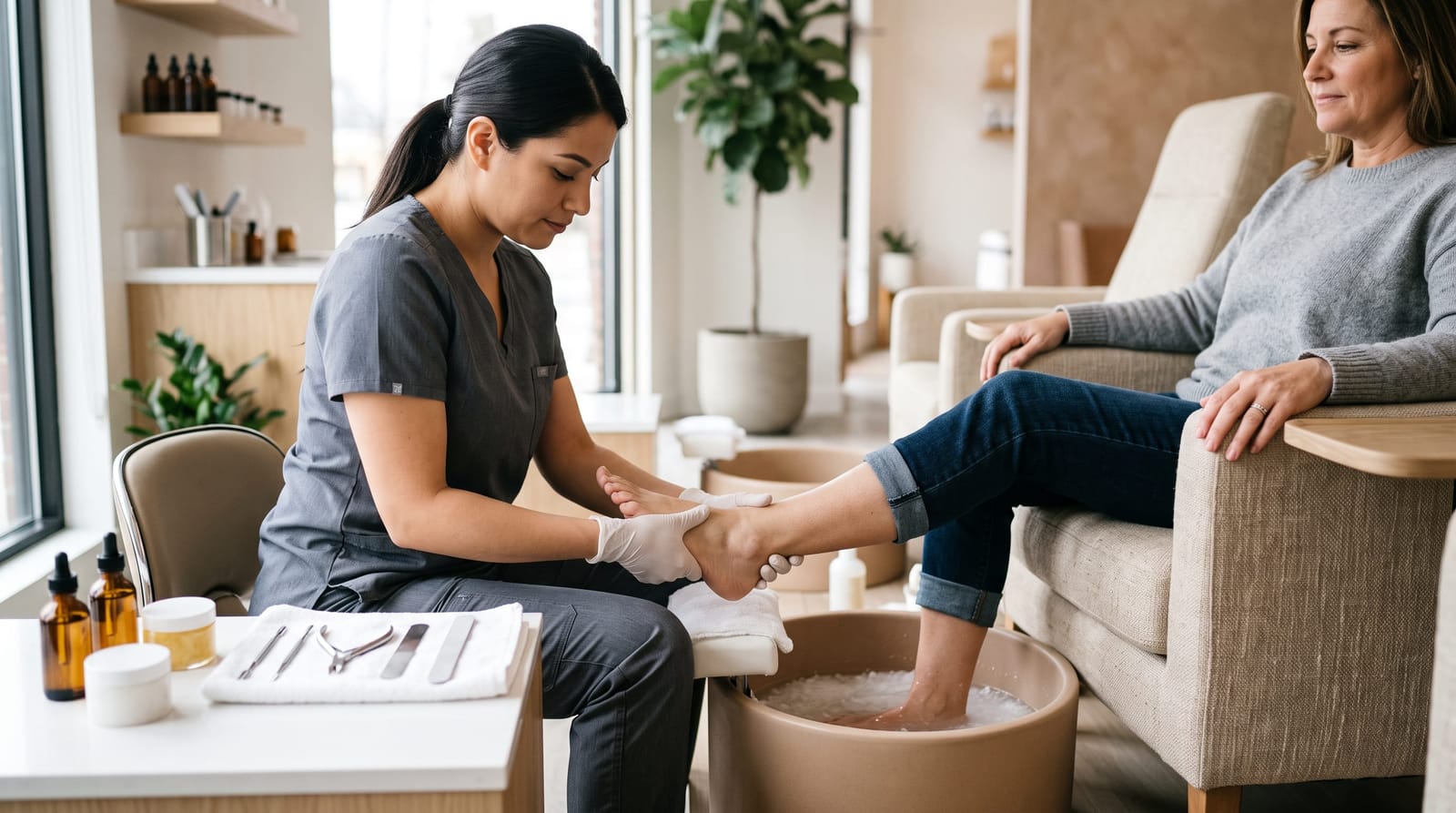
At-home care handles maintenance beautifully, but it has real limitations. A professional callus pedicure provides a level of precision, product strength, and technique that simply isn't replicable with drugstore tools. Here's what makes the professional experience different at a spa like Thi Spa & Nails:
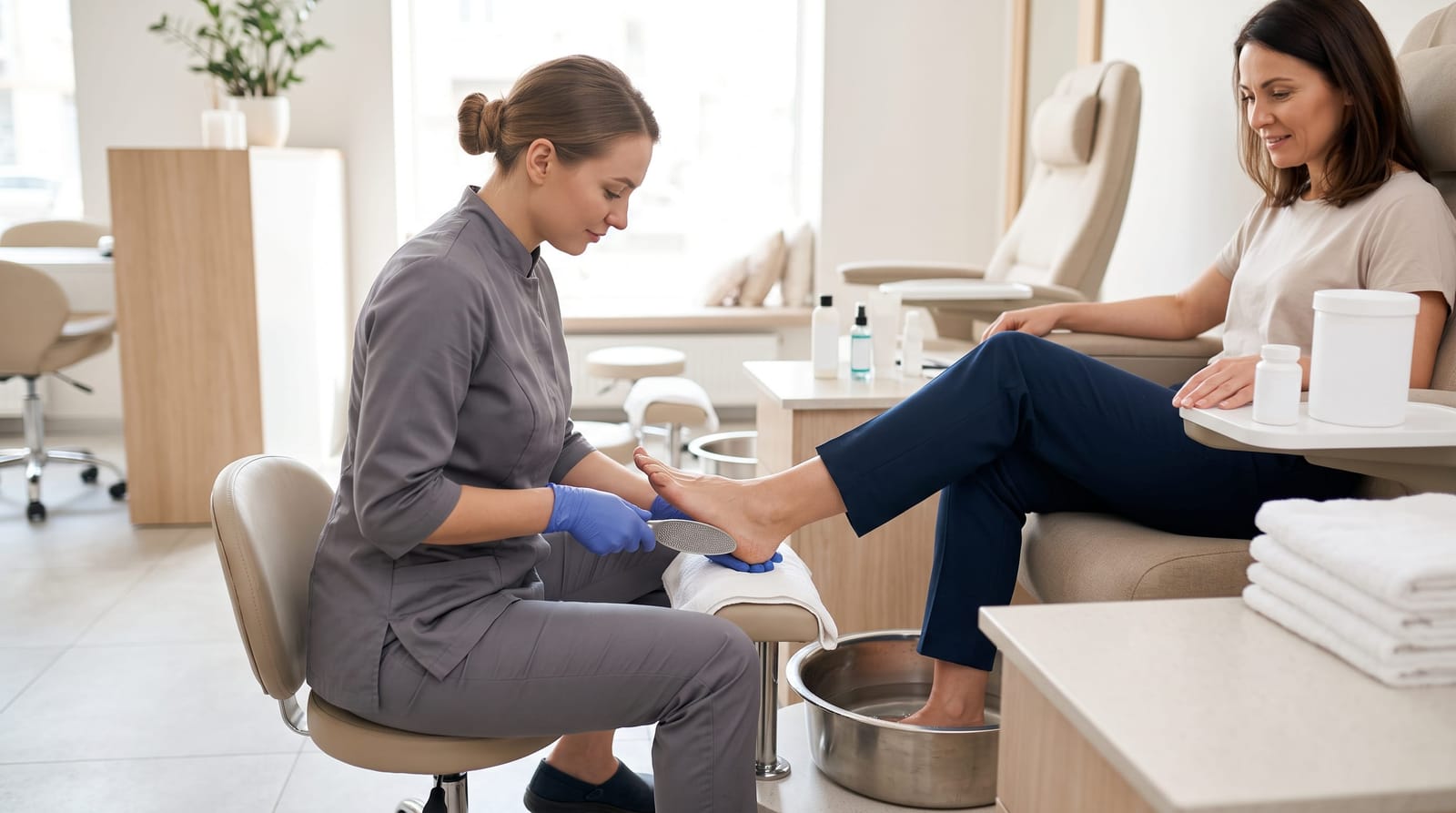
Professional-grade exfoliation tools and products: Licensed nail technicians use professional-strength exfoliating solutions and specialized implements designed to safely remove thickened skin without causing trauma. These are formulated differently from retail products and work more efficiently in a single session.
Callus softeners with extended contact time: Professional callus softeners are applied strategically and left on for precisely timed intervals, maximizing effectiveness. This isn't something that's easy to replicate at home without training.
A trained eye on your skin's condition: Experienced estheticians can assess the severity of callus buildup, identify areas of concern, and adjust the treatment accordingly. They're also positioned to recognize when a client's condition may benefit from a conversation with a podiatrist, which is always recommended for deep fissures, pain, or signs of infection. (For those situations, consulting a licensed podiatrist in San Francisco is the appropriate next step, not a spa visit.)
Hydration that penetrates deeply: Professional pedicures often incorporate warm paraffin wax treatments, intensive mask applications, or nourishing foot masques that deliver moisture far more effectively than standard lotions. When paired with a foot massage, circulation is stimulated, helping skin receive nutrients and recover more quickly.
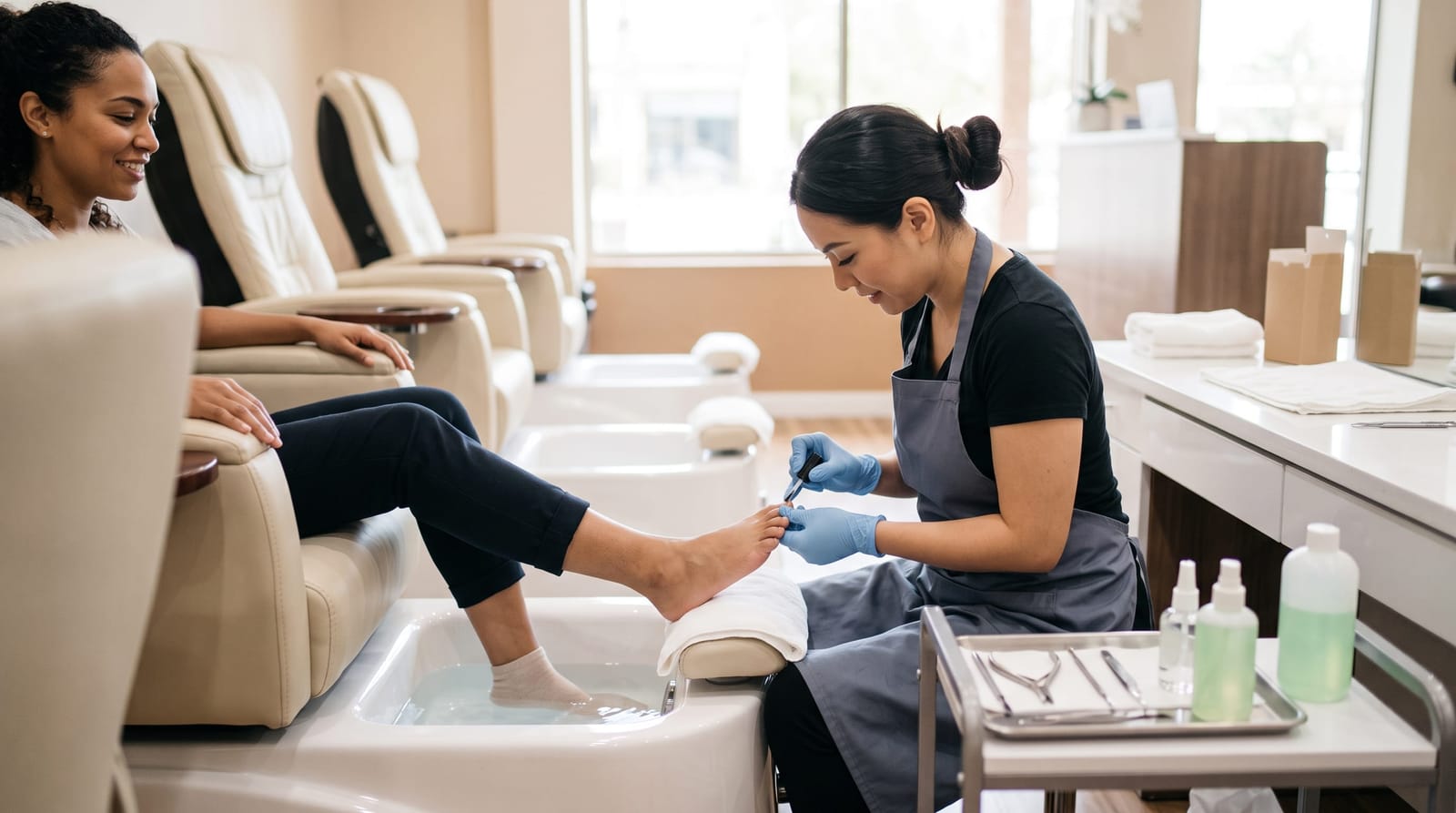
For clients who enjoy our specialty pedicure services at Thi Spa & Nails, the callus pedicure and callus treatment add-ons are designed specifically for this: combining thorough exfoliation with deep hydration in a single, relaxing session.
How to Know When Professional Care Is Necessary
Not every cracked heel requires a professional appointment, but certain signs indicate that at-home care isn't enough:
- Heel fissures that are deep, bleeding, or painful to walk on
- Calluses that feel rigid and don't respond to moisturizing after two to three weeks
- Skin that appears inflamed, red, or shows any signs of infection (in which case, please see a podiatrist rather than a spa)
- Recurring cracking that returns within days of a home exfoliation session
- You simply want a thorough, professional reset before starting a home maintenance routine
A professional callus pedicure is also an excellent starting point if you've never had structured foot care before. Getting to a clean baseline makes home maintenance significantly more effective going forward.
Maintaining Your Results Between Professional Visits
The best outcomes come from combining professional treatment with a steady home routine. After a callus pedicure at Thi Spa & Nails, most clients find their heels remain noticeably smoother for two to four weeks: longer with good home care habits in place.
To extend your results:
- Moisturize heels every evening, not just when they feel dry
- Wear supportive, closed-back shoes as often as possible
- Do a gentle pumice stone session once per week after bathing
- Stay hydrated: skin health starts from the inside
- Schedule a professional callus treatment every four to six weeks as part of your regular pedicure routine
Think of professional callus care the same way you think about haircuts: regular maintenance keeps things manageable, while neglect means a more intensive correction later. Clients searching for cracked heel treatment in San Francisco near Nob Hill and Rincon will find that pairing a professional callus pedicure with a simple home routine produces the most lasting results.
Frequently Asked Questions
How often should I get a professional callus pedicure for cracked heels?
For most people, a professional callus pedicure every four to six weeks, paired with consistent at-home moisturizing, is enough to keep heels smooth and prevent deep fissures from returning. Those with more persistent callus buildup may benefit from more frequent visits initially, then spacing out appointments as the skin improves.
Is it safe to use a metal foot grater or callus shaver at home?
Metal callus shavers and "cheese grater"-style files can remove too much skin too quickly, leading to raw, irritated areas or even minor cuts. For home use, a pumice stone or fine-grade foot file used gently on softened skin is a safer and more controlled option. Leave aggressive callus removal to trained professionals.
When should I see a podiatrist instead of a nail technician for cracked heels?
If your cracked heels are painful, bleeding, showing signs of infection, or associated with an underlying health condition, consulting a licensed podiatrist is the appropriate step, not a spa service. Nail technicians are trained in cosmetic foot care, while podiatrists are medical professionals qualified to diagnose and treat medical foot conditions. When in doubt, always check with a healthcare professional first.
What ingredients should I look for in a heel cream?
For cracked heels, look for heel creams containing urea (10-25%), glycerin, shea butter, or lactic acid. These ingredients work in complementary ways: urea and lactic acid gently exfoliate while drawing moisture in, while glycerin and shea butter seal that moisture into the skin. Apply to clean, slightly damp skin for best absorption.
The Bottom Line on Cracked Heel Care
Cracked heels respond best to a two-pronged approach: professional callus treatment to reset and deeply exfoliate, and a consistent at-home routine to maintain results. Neither works as well in isolation. If you're ready for a professional reset, Thi Spa & Nails offers dedicated callus pedicure services and add-on treatments designed for clients who want real, lasting improvement, not just a surface-level polish. Explore our full range of pedicure services in San Francisco to find the right fit for your foot care goals.