Gel-X vs. Acrylic vs. Hard Gel: Which Nail Extension Is Right for You?
If you've been researching nail extensions in San Francisco, you've probably landed on our complete guide to Gel-X extensions in San Francisco and wondered: how does Gel-X actually stack up against the other options? With so many extension systems on the market, gel-x vs acrylic nails, hard gel, dip powder, the comparison can feel overwhelming. This guide cuts through the noise by putting the three most popular professional extension systems side by side: Gel-X, acrylic, and hard gel. We'll look at durability, application, removal, nail health, and overall appearance so you can walk into your next appointment knowing exactly what to ask for. Spoiler: if you want a lightweight, natural-looking set with a gentler removal process, one option stands out from the rest.
What Are Each of These Extension Systems?
Before comparing them head-to-head, it helps to understand what each system actually is, because the chemistry behind each one directly affects how your nails look, feel, and hold up over time.
Gel-X Extensions
Gel-X is a soft gel extension system developed by Aprés Nail that uses pre-shaped, full-cover nail tips made from a flexible soft gel formula. Your technician selects a tip in your exact nail shape and size, applies a gel-based adhesive called extend gel, and cures everything under a UV or LED lamp. The result is a seamless, lightweight extension that sits flush with your natural nail. Because the tips come pre-formed, there's no sculpting, no filing into shape, and no strong chemical odor during application. The system has surged in popularity since around 2018, and today it's one of the most requested services at modern nail studios across the Bay Area.
Acrylic Extensions
Acrylics have been the industry workhorse for decades. A technician mixes a liquid monomer with a powder polymer to create a paste-like bead that's sculpted directly onto your nail: either over a plastic tip or a paper form. The mixture hardens through a chemical reaction called polymerization (no lamp required), creating a rigid structure that can be filed and shaped into virtually any length or form. Acrylic's strength is its biggest selling point, but that same rigidity comes with trade-offs we'll cover below.
Hard Gel Extensions
Hard gel sits somewhere between Gel-X and acrylic. Like Gel-X, it cures under a UV or LED lamp. Like acrylic, it's sculpted onto the nail and can be built up in layers. It produces a glossy, natural-looking finish and is more flexible than acrylic, but it's not as flexible as soft gel, and it cannot be soaked off with acetone. Removal requires filing down the entire enhancement, which adds time and increases the risk of surface damage if done carelessly.
Application Process: How They're Actually Applied
The application experience varies dramatically between these three systems, and it matters, especially if you have sensory sensitivities or limited time.
Gel-X Application
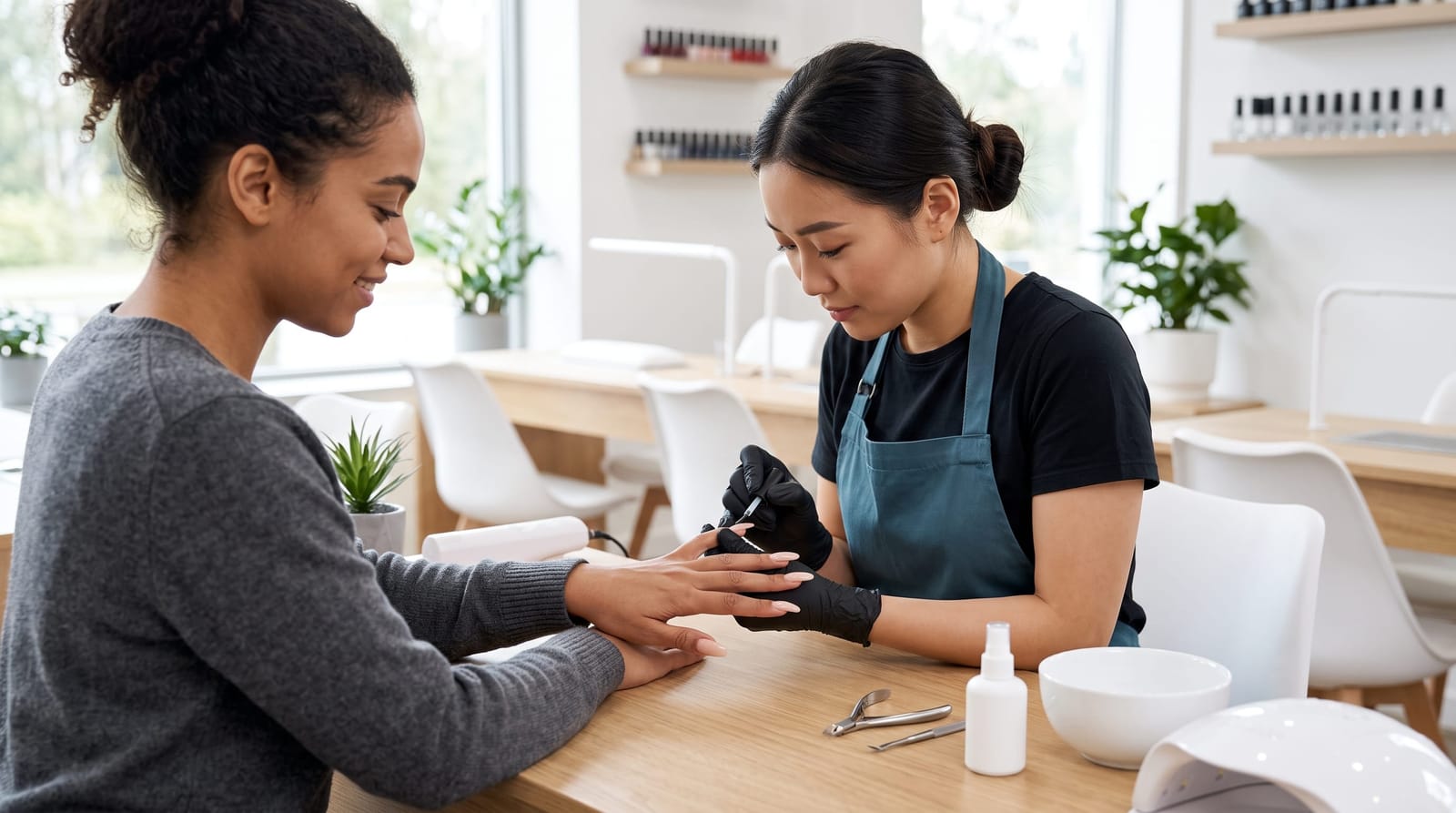
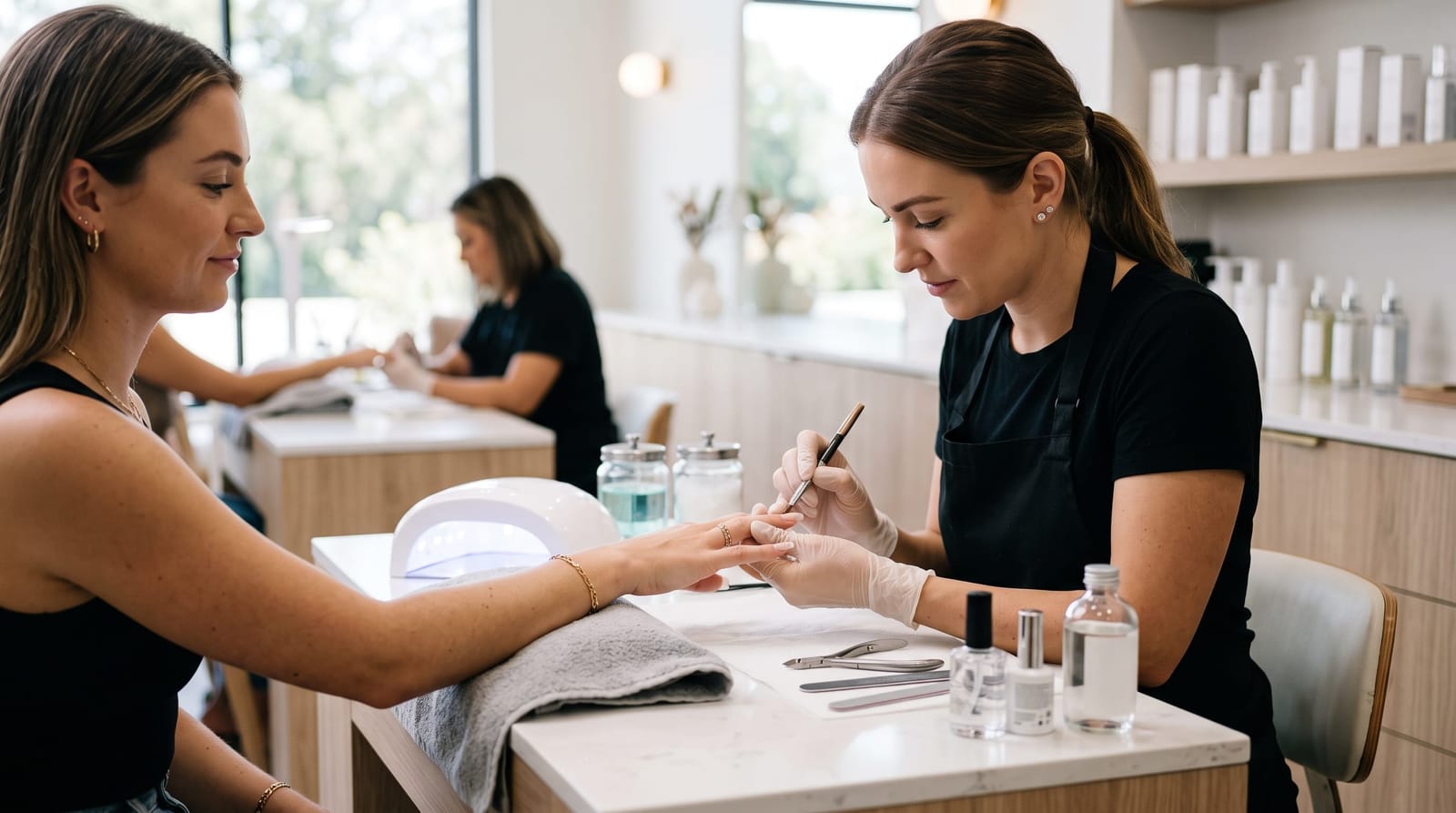
A skilled technician can complete a full Gel-X set in approximately 45 to 60 minutes. The process looks like this:
- Natural nails are prepped, lightly buffed, and dehydrated
- A nail primer or bonder is applied to maximize adhesion
- Extend gel is applied to the natural nail and/or the tip
- A pre-shaped tip is selected for each finger and pressed into place
- Each nail is cured under an LED lamp for 60 seconds
- Minor filing and shaping is done to personalize the fit
- Color gel and topcoat are applied and cured
There are no strong chemical fumes, no mixing of powders and liquids, and very little aggressive nail prep. For clients with gel-x extensions on short nails, the pre-shaped tips are particularly valuable because they provide coverage and shape even when there's minimal natural nail to work with.
Acrylic Application
Acrylic application typically takes 60 to 90 minutes and involves a more intensive prep process. The natural nail is filed down more aggressively to create adhesion for the monomer-polymer mixture. Many clients find the smell of liquid monomer strong and irritating: salons without proper ventilation can make this especially unpleasant. The sculpting process requires significant skill and is harder to standardize, meaning results can vary more noticeably between technicians.
Hard Gel Application
Hard gel application takes roughly 60 to 75 minutes. It doesn't have the harsh odor of acrylics, and the lamp curing process is familiar to anyone who's had a gel manicure. However, building up the product in layers to achieve the right thickness and shape requires more time than placing a pre-shaped Gel-X tip, and the results depend heavily on the technician's sculpting ability.
Durability and Wear: Which Lasts the Longest?
This is where the conversation gets nuanced, because "durability" means different things to different people. Are you worried about breaking a nail? Lifting? How often you need fills?
At-a-Glance Durability Comparison
- Gel-X: Lasts approximately 3 to 5 weeks with proper care; more flexible, so it bends rather than snaps
- Acrylic: Can last 6 to 8 weeks between fills; rigid structure withstands more impact but can crack or snap under pressure
- Hard Gel: Typically lasts 4 to 6 weeks; more flexible than acrylic but less durable than a properly maintained acrylic set
Acrylic wins on raw longevity, particularly for people with very active hands: think construction workers, athletes, or anyone constantly working with their hands. The rigid structure resists breaking even at longer lengths. However, when an acrylic nail does break, it often breaks dramatically and can cause trauma to the natural nail underneath.
Gel-X, by contrast, has a softer, more flexible nature that allows it to give slightly under pressure. Studies on soft gel formulas show that the flexibility actually absorbs impact rather than transferring it to the natural nail. The trade-off is that Gel-X may be more prone to lifting at the cuticle area, especially if the prep work isn't thorough or if the client frequently submerges their hands in water. For most everyday lifestyles, however, a well-applied Gel-X set comfortably makes it 3 to 4 weeks without any issues.
Removal: The Process That Can Make or Break Your Natural Nails
Removal is arguably the most important factor for anyone who cares about the long-term health of their natural nails. This is where Gel-X has a clear, meaningful advantage.
Gel-X Removal
Gel-X tips are made of soft gel, which is fully soluble in acetone. Removal involves:
- Soaking nails in acetone for approximately 15 to 20 minutes
- Gently sliding the softened extensions off: no aggressive filing required
- Light buffing to remove any residue
The entire process typically takes under 30 minutes and causes minimal stress to the natural nail when done correctly by a trained technician.
Acrylic Removal
Acrylic removal is a more involved process. Nails are soaked in acetone for 20 to 40 minutes, and the softened product still needs to be scraped away in stages. Even with patient soaking, most technicians need to do some filing. Rushed or improper removal, or attempting to peel or force off acrylics at home, is a leading cause of nail thinning and surface damage.
Hard Gel Removal
Hard gel cannot be soaked off at all. It must be filed down to a thin layer and then buffed away. This is the most labor-intensive and potentially damaging removal process of the three. In the hands of an experienced technician it's manageable, but it requires more time and more contact with the natural nail surface.
Nail Health: What Each System Does to Your Natural Nails
One of the most common questions clients ask is whether nail extensions damage their natural nails, and the honest answer is that any extension system carries some risk if applied carelessly, removed improperly, or worn without adequate breaks. That said, not all systems are equal in terms of the stress they place on natural nails.
Gel-X is widely regarded as the gentlest of the three major systems. The reasons are specific:
- Minimal buffing during prep: only a light pass to remove shine
- No aggressive filing to create a "rough" surface for adhesion
- No harsh chemical monomers that can irritate the nail bed or surrounding skin
- Flexible tips that don't transfer as much impact force to the natural nail
- Acetone-soluble formula that allows clean, low-trauma removal
If you're curious about the specifics of how extensions interact with the natural nail plate, our detailed breakdown on whether gel-x extensions damage nails covers this in depth, including what the science says about nail plate thickness before and after various extension systems.
Acrylic, when applied and removed correctly by a skilled technician, can be worn long-term without catastrophic damage. However, the aggressive prep filing, the chemical exposure from monomer, and the more difficult removal process collectively create more cumulative stress on the natural nail over time. Clients who've worn acrylics for years often notice thinner, more brittle natural nails, though lifestyle factors and removal habits play a significant role.
Appearance and Aesthetics: How Do They Look and Feel?
For many clients, this is the deciding factor. Here's how each system performs aesthetically:
Gel-X
Gel-X tips have a naturally thin, tapered profile that closely mimics the look of a real nail. Because the tips are pre-formed, they have a consistent C-curve and sidewall structure that looks polished without appearing "done." Gel finishes, whether sheer, glossy, or matte, have a depth and shine that's difficult to replicate with acrylic. Most clients describe Gel-X as feeling surprisingly lightweight; many say they almost forget they're wearing extensions.
Acrylic
Acrylic can be sculpted into dramatic lengths and bold shapes that Gel-X cannot always achieve. For clients who want stiletto nails past 1.5 inches or coffin nails at extreme lengths, acrylic may offer more structural support. The finish is typically more matte before topcoat and requires gel polish on top to achieve the sheen that gel systems produce naturally. At shorter to medium lengths, however, a well-done acrylic set and a well-done Gel-X set are visually nearly indistinguishable to the average eye.
Hard Gel
Hard gel produces a beautiful, glossy finish and looks very similar to Gel-X. The main aesthetic difference is that hard gel can be sculpted into slightly more customized shapes since the technician is building the structure by hand. For clients who fall between standard Gel-X tip sizes or have unusual nail bed shapes, hard gel's custom build can be a better fit.
Want to Go Deeper? Explore These Related Topics
This comparison gives you a solid framework for choosing between extension systems, but some decisions require more specific context. Two questions our San Francisco clients ask most often:
- Short nails: If you're worried your natural nails are too short for extensions, the answer may surprise you: learn what's actually possible with gel-x extensions on short nails and how tip sizing works for different nail bed lengths.
- Nail health concerns: If you've had bad experiences with extensions in the past or your natural nails are already thin, understanding whether gel-x extensions damage nails will help you go into your appointment with realistic expectations and the right questions to ask your technician.
The Bottom Line: Which Extension Is Right for You?
When comparing gel-x vs acrylic nails, or any combination of these three systems, the right choice comes down to your lifestyle, your nail health goals, and the look you're after. Acrylic has undeniable strength for dramatic lengths and heavy use. Hard gel offers sculpting flexibility with a beautiful finish. But for the vast majority of clients who want long, natural-looking nails with minimal damage, fast application, and an easy removal experience, Gel-X is the modern standard for a reason.
At Thi Spa & Nails near Nob Hill, our technicians are trained specifically in Gel-X application to ensure proper prep, perfect tip sizing, and a removal process that leaves your natural nails intact. Ready to experience the difference for yourself? Book your Gel-X appointment in San Francisco today and see why our clients keep coming back.