Why Are My Gel-X Extensions Lifting? Causes and Fixes
You walked out of the salon with a flawless set of Gel-X extensions, and three days later, you noticed a corner peeling up. It's one of the most frustrating experiences in nail care, and it's also one of the most common questions we hear at Thi Spa & Nails. Gel-X extensions lifting causes range from oily nail beds to rushed prep work to simple aftercare missteps. The good news? Nearly every lifting issue is preventable. This guide breaks down the most common culprits and what can be done to stop them.
1. Oily Nail Beds: The Hidden Enemy of Adhesion
Natural oil production varies dramatically from person to person, and for clients with naturally oily nail beds, Gel-X adhesion is a genuine challenge. Gel-X extensions rely on a strong bond between the soft gel tip and the natural nail surface. When oil is present at the point of contact, even in microscopic amounts, it creates a barrier that prevents proper curing and bonding.
Studies on gel adhesion consistently show that surface contamination is responsible for a significant portion of early lifting failures. In professional nail training programs, oily nail beds are cited as one of the top three root causes of gel lifting across all gel nail systems.
What proper preparation looks like:
- Thorough cleansing of the nail plate with a lint-free wipe and nail cleanser before any product is applied
- Application of a pH-balancing nail prep solution to dehydrate the surface and strip residual oils
- A quality bonding agent or base coat applied immediately after dehydration, before oils have a chance to return to the surface
If you know you have oily nails, mention it at your appointment. A skilled technician will adjust the prep protocol accordingly, which can make the difference between a set that lasts two weeks and one that lasts four or more.
2. Inadequate Cuticle and Nail Plate Preparation
This is the single most common cause of Gel-X extensions lifting prematurely. Professional nail training academies consistently point to inadequate cuticle preparation as the root cause of most gel lifting failures, not the product itself, and not the client's aftercare.
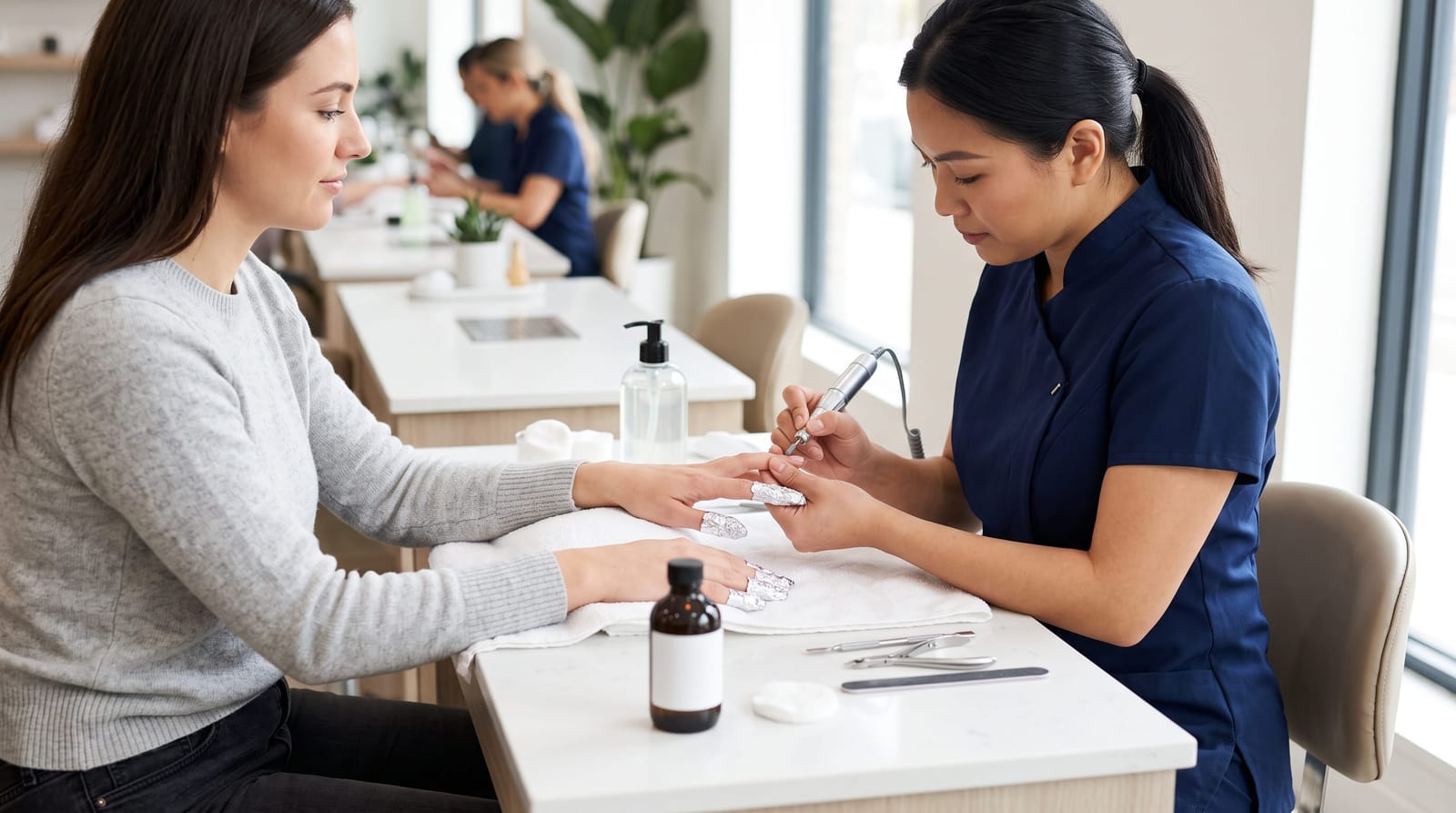
The issue is subtle but critical: any residual cuticle tissue or dead skin left on the nail plate will prevent the gel tip from bonding directly to the nail. Over time, often within 48 to 72 hours, that unbonded edge begins to lift, and moisture and debris can work their way underneath the extension, accelerating the problem.
Best practice nail prep includes:
- Pushing back and thoroughly removing the cuticle from the nail plate surface, not just the skin around the nail
- Light buffing of the nail plate to remove shine and create micro-texture for better adhesion
- Dust removal with a clean brush before any product application
- Avoiding lotion or hand cream on the day of the appointment
At Thi Spa & Nails, every Gel-X appointment includes a dedicated prep stage. Rushing this step, something that can happen at high-volume salons, is one of the most preventable reasons extensions fail.
3. Application Errors That Cause Lifting Later
Even when the nail bed is perfectly prepped, errors during the application process itself can lead to lifting within days. These are technique-based issues that clients often can't see in the moment but will feel soon after leaving the salon.
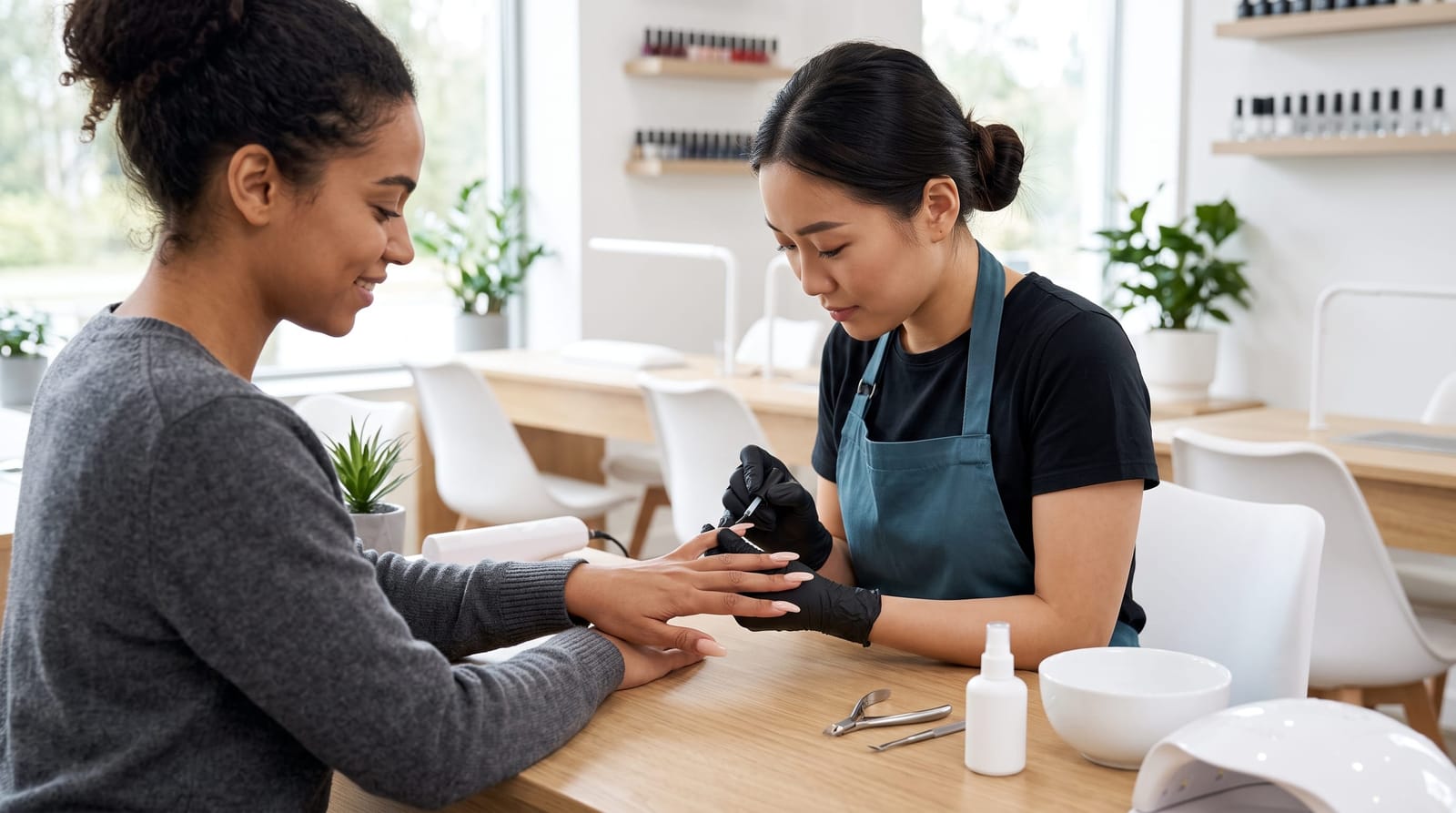
Common application mistakes that cause Gel-X extensions lifting include:
- Incorrect tip sizing: A tip that is even slightly too wide will create gaps along the sidewalls: the most common lifting point. Research from nail education programs shows that improper tip sizing is a factor in approximately 30% of premature lifting cases.
- Air bubbles under the tip: If the gel is not distributed evenly when the tip is pressed onto the nail, small air pockets form beneath the surface. These bubbles expand and contract with temperature changes, breaking the seal.
- Undercuring: Gel-X requires precise curing times under an LED lamp. Undercured gel remains tacky and flexible in ways that compromise the bond. Each layer must be fully cured before the next step.
- Flooding the cuticle: Gel that touches the skin, even slightly, will lift because it can't bond to skin the way it bonds to the nail plate.
These are exactly the kinds of errors that experienced, properly trained technicians avoid consistently. Technique matters far more than product quality when it comes to long-lasting Gel-X wear.
4. Aftercare Mistakes That Shorten Your Wear Time
Even a perfectly applied set can lift early if aftercare is neglected. Once you leave the salon, the responsibility for protecting your extensions shifts to you, and a few common habits can significantly shorten wear time.
Top aftercare mistakes that cause lifting:
- Soaking hands in water too soon: Extended water exposure in the first 24 to 48 hours after application is particularly damaging. Activities like long baths, swimming, or soaking dishes can introduce moisture under the free edge before the bond has fully stabilized.
- Picking or peeling at the edges: This one seems obvious, but even minor picking, often done unconsciously, creates micro-lifts that worsen rapidly.
- Skipping cuticle oil: Dry, dehydrated nails are more prone to stress fractures and edge lifting. Applying cuticle oil once or twice daily keeps the nail flexible and reduces the mechanical stress that can break the seal at the edges.
- Using nails as tools: Opening cans, scratching surfaces, or prying things with extended nails puts lateral stress on the tip-to-nail bond: exactly where lifting begins.
Understanding what happens during a gel-x extension fill appointment can also help you identify early signs of lifting before they become a bigger problem, so you can address them before your next scheduled visit.
5. Timing and Environmental Factors
Sometimes lifting isn't about technique or aftercare at all: it's about timing and environment. Gel-X extensions placed immediately before a beach vacation, a week of intensive gym use, or prolonged exposure to harsh cleaning chemicals are going to face challenges that a standard wear cycle won't.
San Francisco's weather, particularly the damp, foggy conditions common in neighborhoods like Nob Hill and Rincon, can also be a factor for clients who spend a lot of time outdoors. While Gel-X is more resilient than traditional acrylics in many respects, consistent moisture exposure along the nail edges over multiple days does gradually weaken the bond.
Practical adjustments for high-wear situations:
- Schedule your appointment at least 48 hours before any heavy water or chemical exposure
- Wear gloves when cleaning with harsh products or doing extended dish washing
- Communicate your lifestyle with your technician: a slightly thicker gel application or specific sealant may be recommended for clients with very active hands
Frequently Asked Questions
How long should Gel-X extensions last before lifting?
With proper preparation and good aftercare, Gel-X extensions should last three to four weeks without significant lifting. Some clients with ideal nail conditions and careful habits see wear of up to five weeks. Lifting within the first week almost always points to a prep or application issue rather than an aftercare problem.
Can I fix a lifting Gel-X extension at home?
Minor edge lifting can be temporarily addressed with nail glue designed for gel extensions, but this is a short-term fix. Once moisture or debris has worked under the tip, the risk of bacterial growth increases. It's better to contact your salon and have the affected nail properly assessed and resealed or replaced.
Is lifting more common with Gel-X than with acrylics?
Gel-X and acrylic extensions have different bonding mechanisms. When applied correctly, Gel-X tends to be very resistant to lifting because the entire soft gel tip bonds to the natural nail as a single unit. However, when prep is rushed, Gel-X can lift more noticeably at the edges than a traditional acrylic fill would. The key variable is always preparation quality.
Does picking at lifting extensions damage my natural nails?
Yes. Peeling or forcing a lifted extension off the nail can remove layers of the natural nail plate with it, causing thinning, sensitivity, and white patches. If an extension is lifting, have it professionally removed or filled rather than peeling it yourself.
The Bottom Line
The vast majority of Gel-X extensions lifting causes come down to three things: surface preparation, application technique, and aftercare habits. All three are manageable. When you choose a salon that takes prep seriously, dehydrating the nail, removing cuticle tissue thoroughly, sizing tips precisely, and curing fully, you dramatically reduce your risk of early lifting. At Thi Spa & Nails in San Francisco, every set is built on that foundation. If you're ready to explore the full picture of Gel-X care, our complete guide to Gel-X extensions in San Francisco covers everything from your first appointment through long-term maintenance.